Essential Greek Ingredients | Inside the Myrtos Kitchen
Great Greek cooking often begins with the ingredients. At Myrtos, the menu draws inspiration from Greece’s islands, mainland, mountains and traditions, and many of the ingredients running through it reflect those different landscapes. Some are immediately familiar – extra virgin olive oil, feta and lemon – while others, such as Cretan rock samphire, carob and wild greens, are less expected but equally at home on the Myrtos menu.
What matters is how they make their way onto the plate. Olive oil and lemon are allowed to complement simply cooked fish; wild greens are folded into phyllo or served with butter; carob brings texture to our take on a Greek salad.
From familiar favourites to ingredients you may know less well, each has its own place in the Myrtos kitchen. Here, we take a closer look at how they are used across the menu and the dishes that bring them to the table.
Extra Virgin Olive Oil and Lemon
Few ingredients are as immediately associated with the flavours of Greece as olive oil and lemon, and at Myrtos their simplicity is part of their appeal. Together, they are fundamental to Greek cooking, used to season everything from vegetables and salads to fish and seafood, bringing richness, acidity and freshness in equal measure.
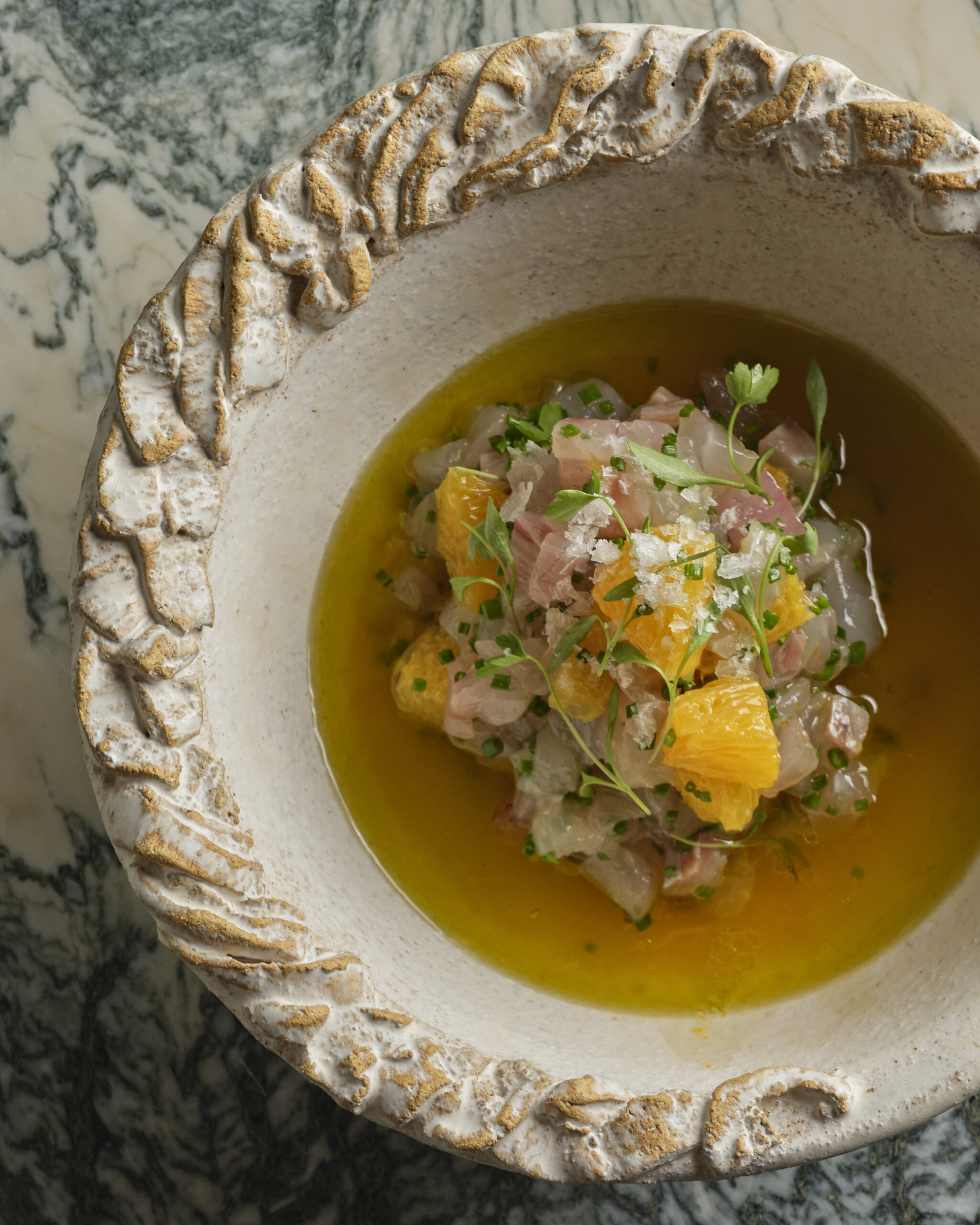
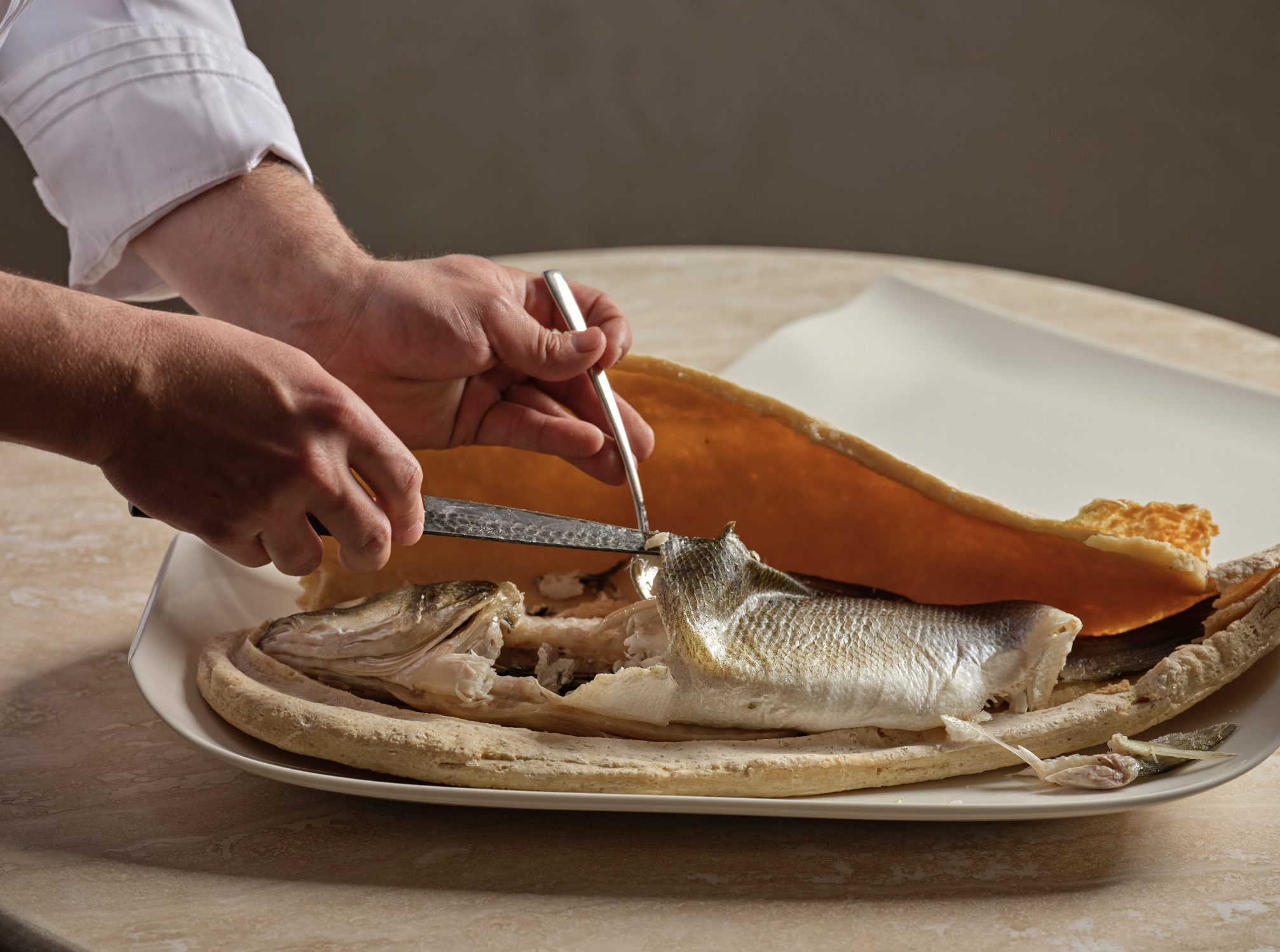
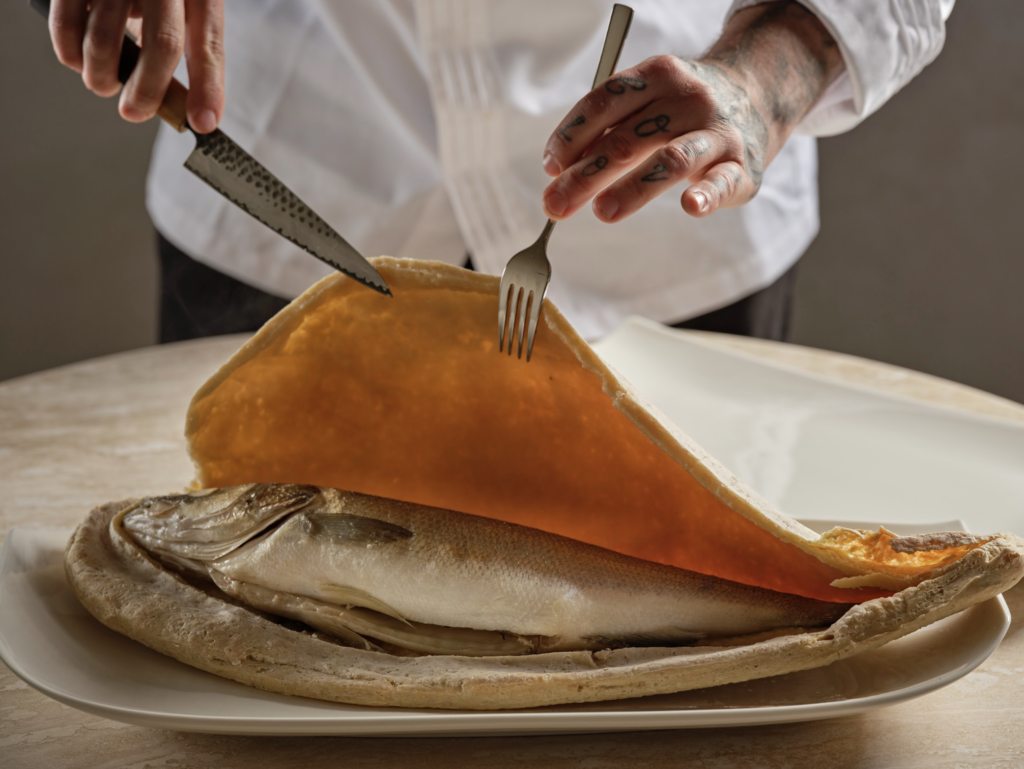
Our pink bream and seabass crudo is finished with extra virgin olive oil, orange and hand-picked afrala salt, keeping the accompaniments deliberately restrained. Extra virgin olive oil appears again with our salt-baked Kefalonian organic sea bass, this time alongside lemon.
Lemon travels further across the menu, bringing acidity and freshness to dishes ranging from whole butter lettuce with anchovy and chives to Greek wild greens with staka butter and whole lobster giouvetsi with orzo, mussels, tomato and basil. Across each, it brings something different – sometimes freshness, sometimes contrast – while allowing the other ingredients on the plate to come through.
Feta, in More Ways Than One
Feta has been part of Greek cooking for centuries, valued for its salty, tangy character and its versatility across salads, pies and cooked dishes. At Myrtos, that versatility is reflected in the different ways it appears across the menu.
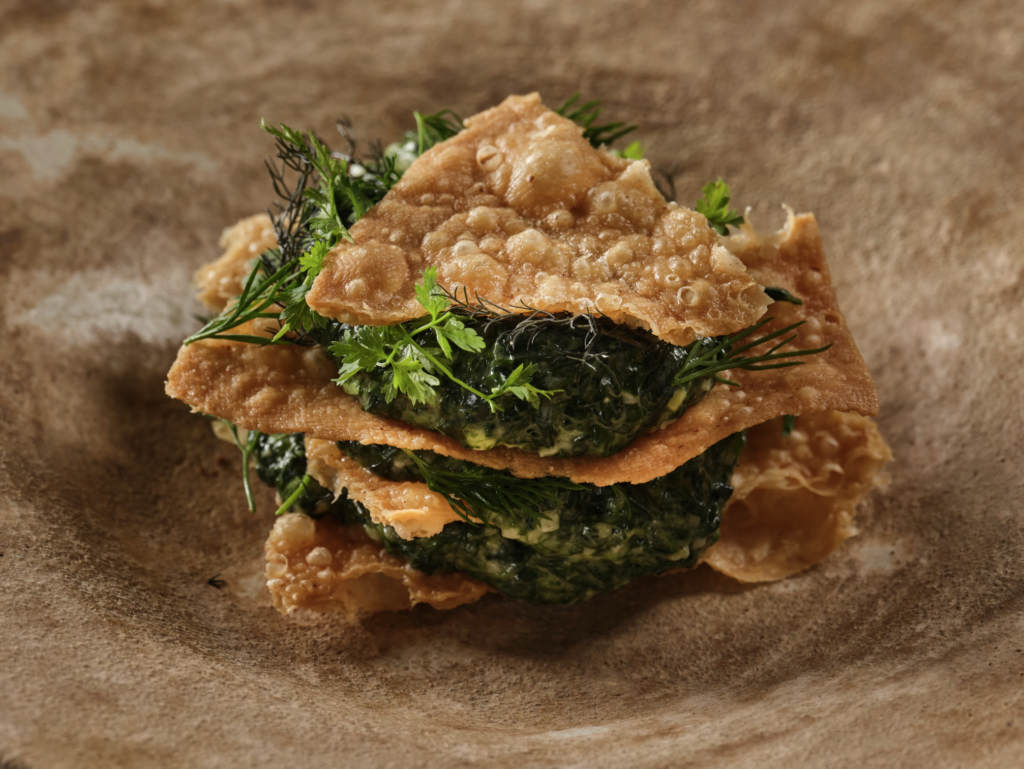
Our Greek salad pairs carob rusks and wild oregano with feta mousse, and feta also appears with aubergine, peppers and pomegranate in the melitzanosalata. It is folded into hortopita with Greek wild greens and phyllo, and paired with lobster-flavoured butter and chilli in our prawns saganaki.
Moving between fresh, spicy, vegetable-led and richer dishes, it is an ingredient that can bring something different to each plate.
Greek Wild Greens
Wild greens have long been part of Greek cooking, gathered seasonally and prepared simply in dishes that allow their distinctive flavours to come through. At Myrtos, they appear in different forms across the menu.
In our hortopita, Greek wild greens are wrapped in phyllo with feta. Elsewhere, stamnagathi – a type of chicory – is served with staka butter and lemon, allowing the greens themselves to remain at the centre of the dish.
The two preparations show different sides of the same ingredient-led approach: one folded into a familiar Greek pie, the other served simply as a dish in its own right.
Cretan Rock Samphire
Some of the ingredients on the Myrtos menu connect particularly closely with the landscape that inspires it. A case in point is Cretan rock samphire, which accompanies our bluefin tuna alongside tomatoes and capers, bringing a coastal ingredient into a fresh, pared-back dish. Rock samphire also appears elsewhere on the menu, pickled and served with poached cod, skordalia, celery, crispy shallots and cod jus.
Used in two very different ways, it moves from the freshness of the tuna dish to something richer and more layered with the cod.
Carob
Carob has a long history in Mediterranean cooking, with the pods of the carob tree dried and ground into flour. At Myrtos, it appears in the form of carob rusks in our Greek salad, bringing a deeper, subtly sweet flavour alongside feta mousse and wild oregano.
Here, carob is not simply an ingredient hidden within a recipe. The rusks contribute another texture to the dish, sitting alongside two equally recognisable Greek flavours in feta and oregano. It is a small detail, but one that shows how familiar dishes at Myrtos can retain their connection to Greek cooking while finding their own expression on the menu.
Thyme Honey
Thyme honey is one of Greece’s most distinctive honeys, produced where flowering thyme grows abundantly across the country’s dry, sun-soaked landscapes.
Aromatic and deeply fragrant, it brings a distinctly Greek note to our loukoumades – Greek donuts – which are served with crushed walnuts and Ceylon cinnamon. It is a combination that brings sweetness, spice and texture together.
From Ingredient to Plate at Myrtos
There is a simplicity at the heart of Greek cooking: good ingredients do not need to be overworked to make an impression. A squeeze of lemon, the saltiness of feta, the bitterness of wild greens or the fragrance of thyme honey can be enough to define a dish.
That thinking runs throughout the menu at Myrtos. Ingredients are given room to retain their own character, whether they are part of a familiar Greek classic or used in a less expected way.
It is this balance of familiarity and discovery that we want to bring to the table in South Kensington – flavours rooted in Greece, expressed through the cooking at Myrtos.
BOOK YOUR TABLE