Essential Greek Ingredients | Inside the Myrtos Kitchen
Great Greek cooking often begins with the ingredients. At Myrtos, the menu draws inspiration from Greece’s islands, mainland, mountains and traditions, and many of the ingredients running through it reflect those different landscapes. Some are immediately familiar – extra virgin olive oil, feta and lemon – while others, such as Cretan rock samphire, carob and wild greens, are less expected but equally at home on the Myrtos menu.
What matters is how they make their way onto the plate. Olive oil and lemon are allowed to complement simply cooked fish; wild greens are folded into phyllo or served with butter; carob brings texture to our take on a Greek salad.
From familiar favourites to ingredients you may know less well, each has its own place in the Myrtos kitchen. Here, we take a closer look at how they are used across the menu and the dishes that bring them to the table.
Extra Virgin Olive Oil and Lemon
Few ingredients are as immediately associated with the flavours of Greece as olive oil and lemon, and at Myrtos their simplicity is part of their appeal. Together, they are fundamental to Greek cooking, used to season everything from vegetables and salads to fish and seafood, bringing richness, acidity and freshness in equal measure.
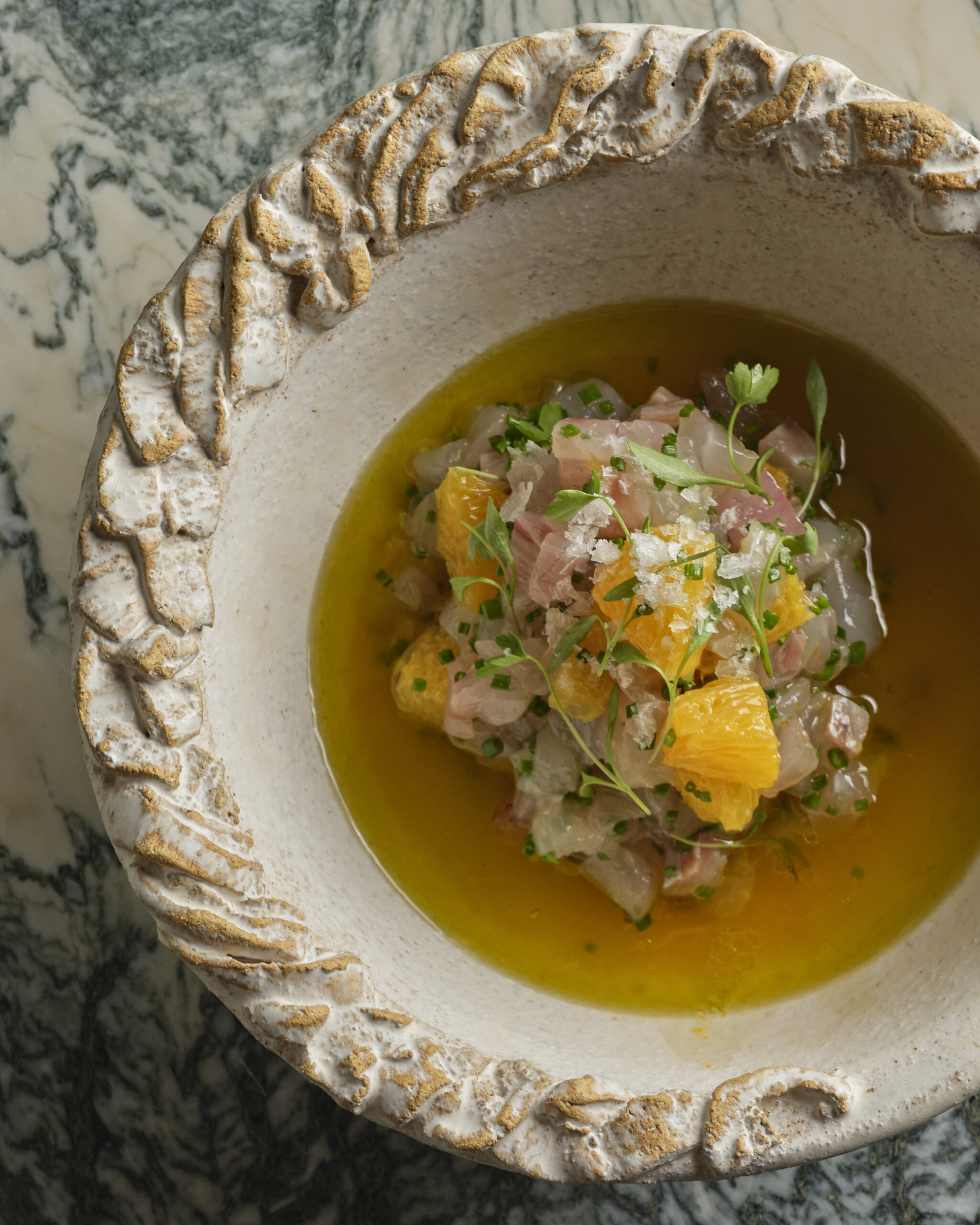
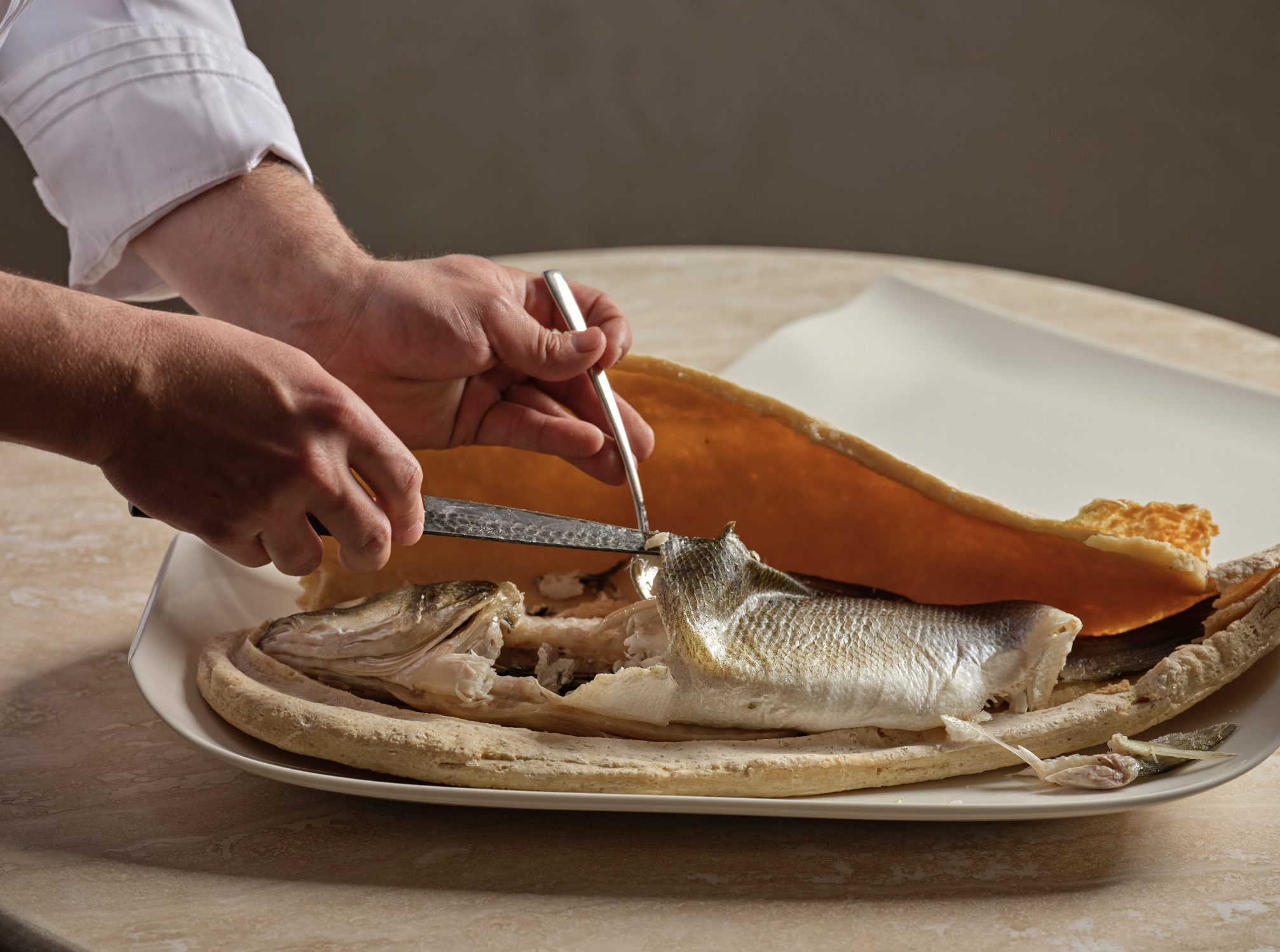
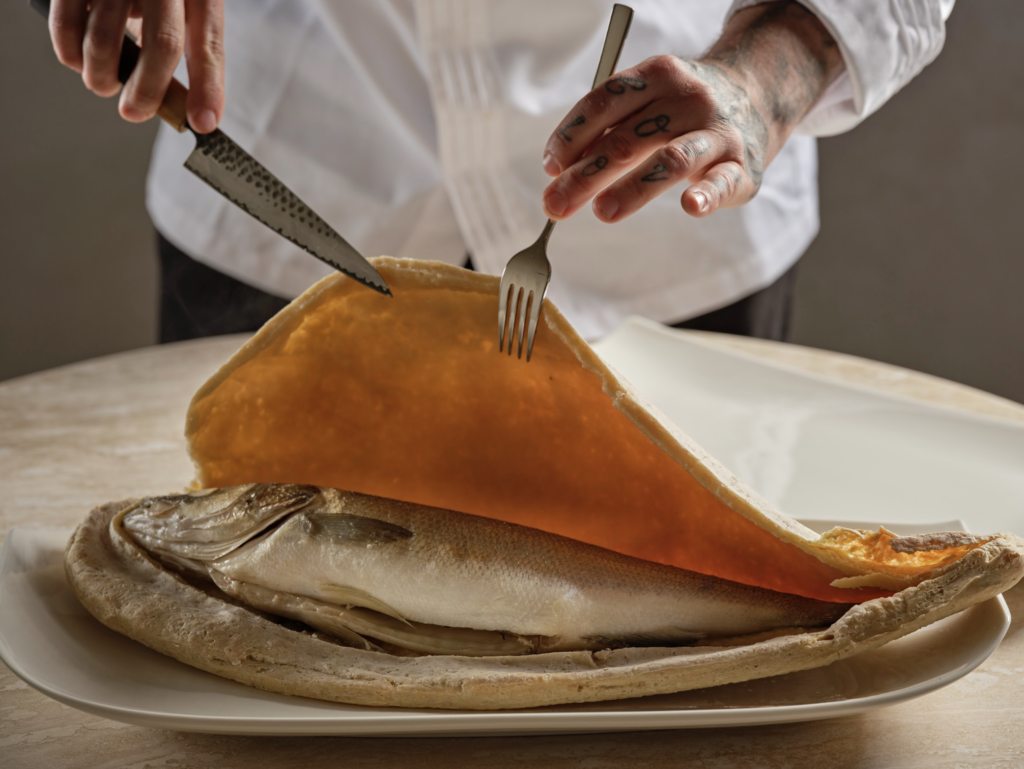
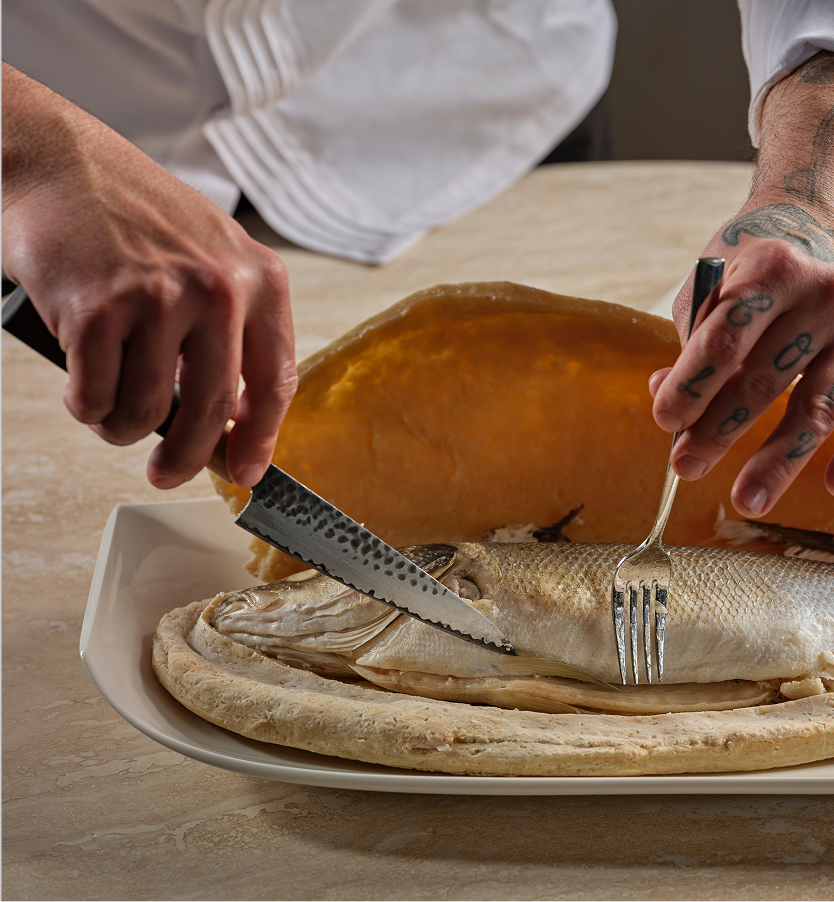
Our pink bream and seabass crudo is finished with extra virgin olive oil, orange and hand-picked afrala salt, keeping the accompaniments deliberately restrained. Extra virgin olive oil appears again with our salt-baked Kefalonian organic sea bass, this time alongside lemon.
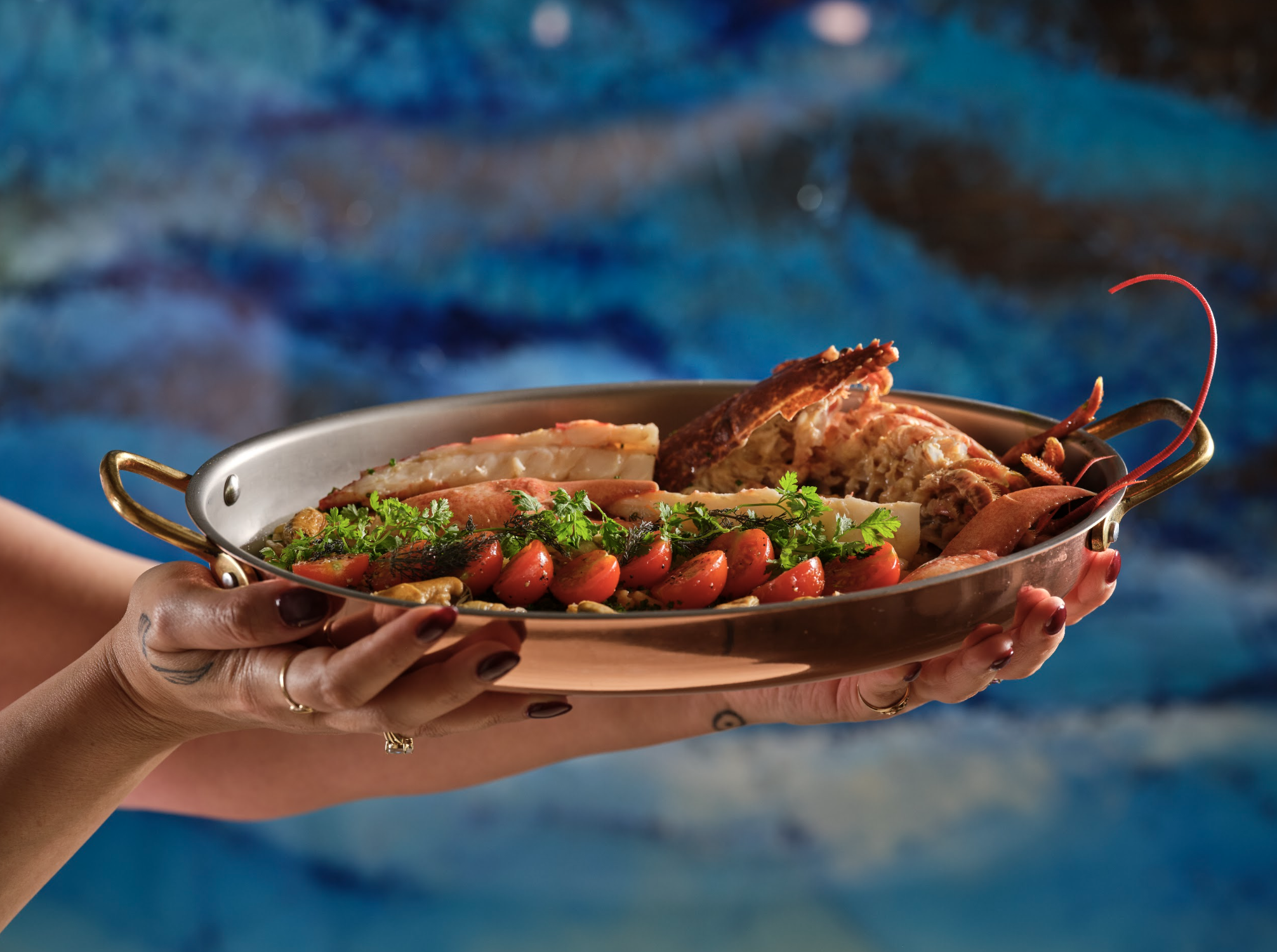
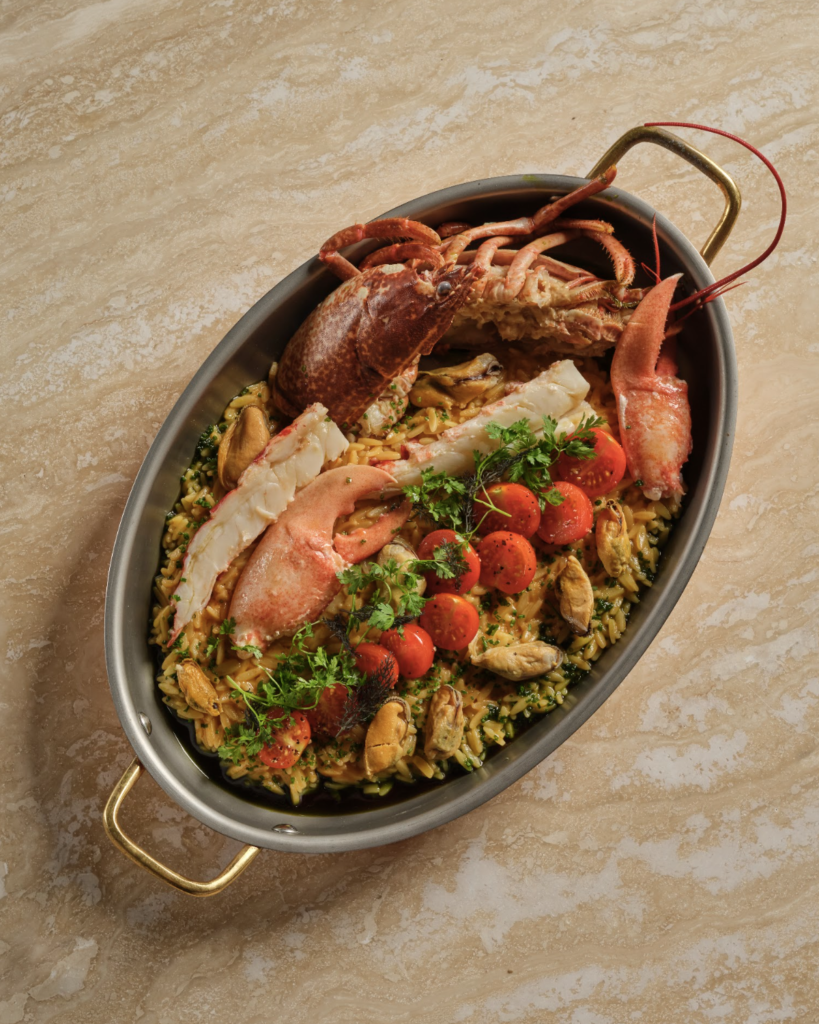
Lemon travels further across the menu, bringing acidity and freshness to dishes ranging from whole butter lettuce with anchovy and chives to Greek wild greens with staka butter and whole lobster giouvetsi with orzo, mussels, tomato and basil. Across each, it brings something different – sometimes freshness, sometimes contrast – while allowing the other ingredients on the plate to come through.
Feta, in More Ways Than One
Feta has been part of Greek cooking for centuries, valued for its salty, tangy character and its versatility across salads, pies and cooked dishes. At Myrtos, that versatility is reflected in the different ways it appears across the menu.
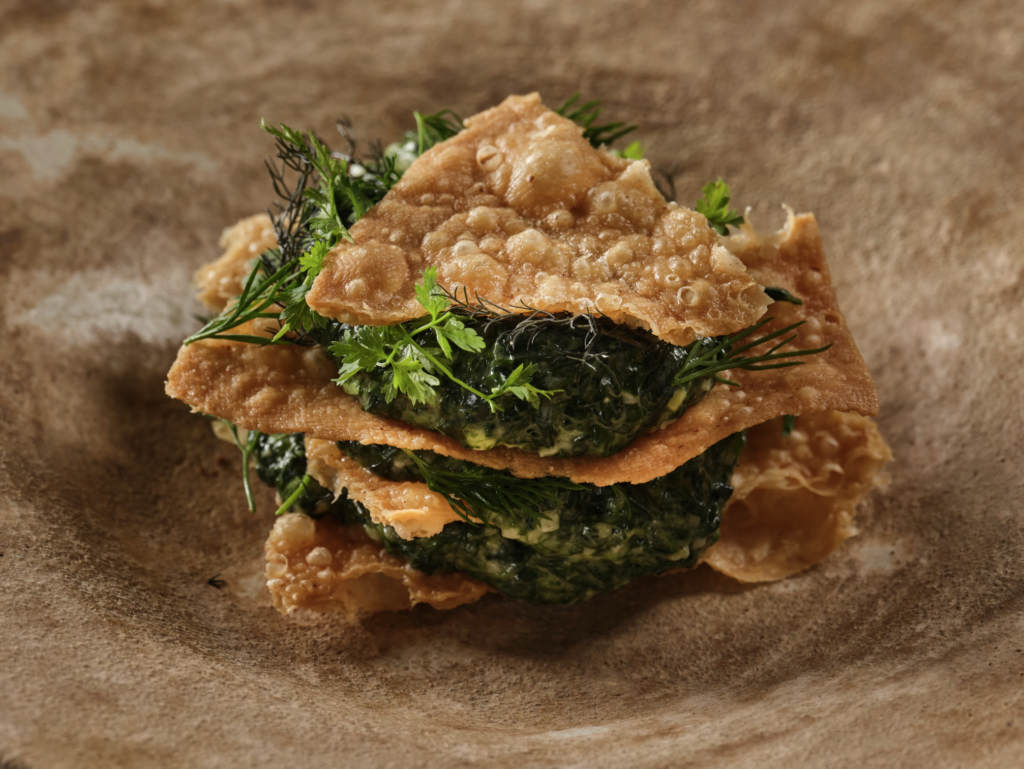
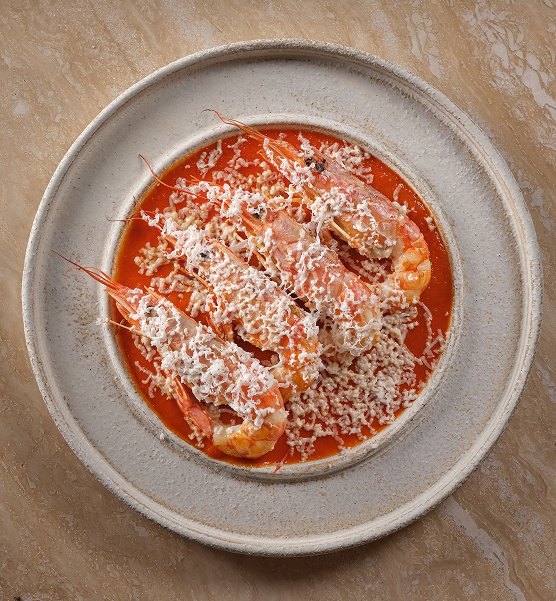
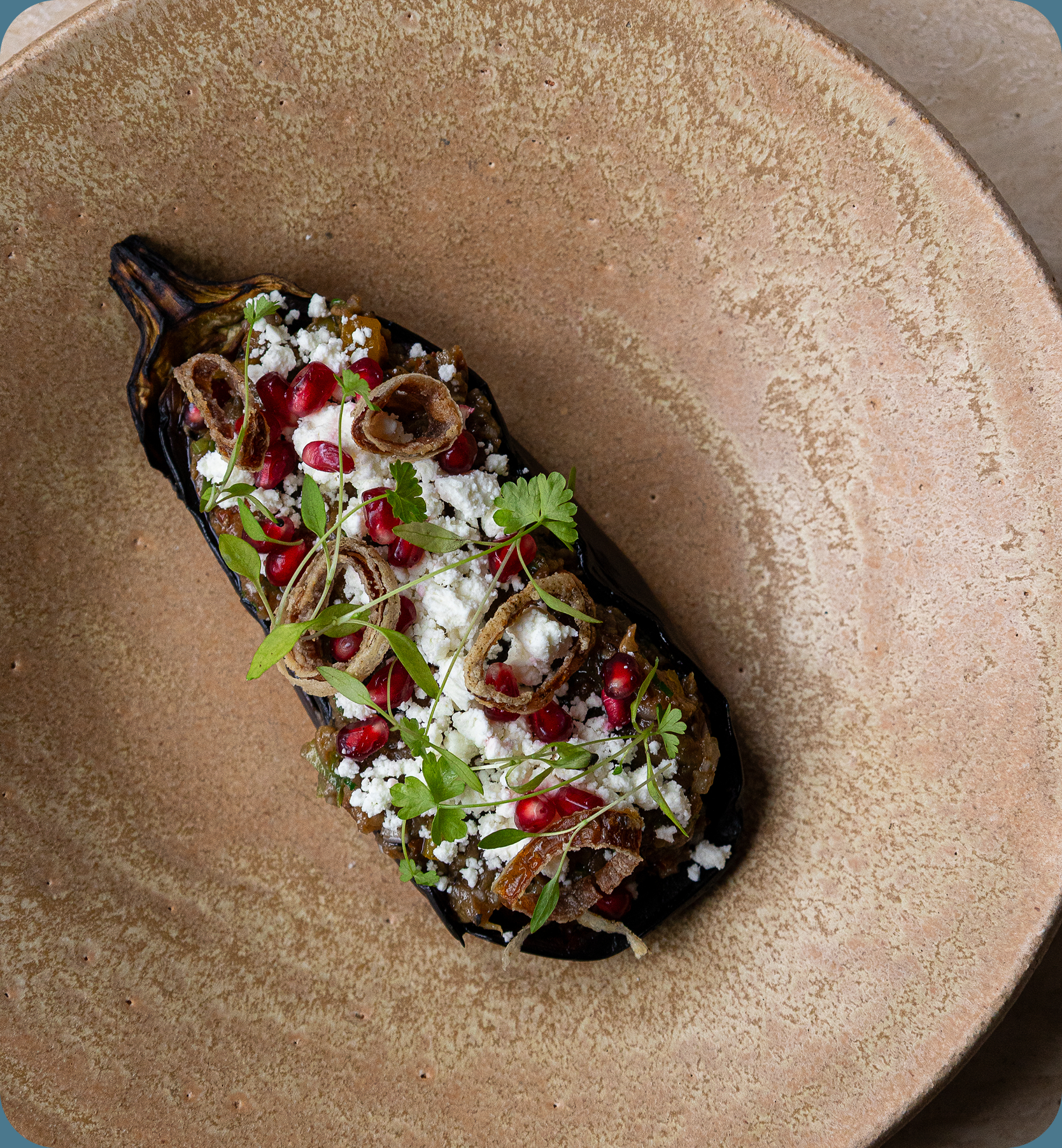
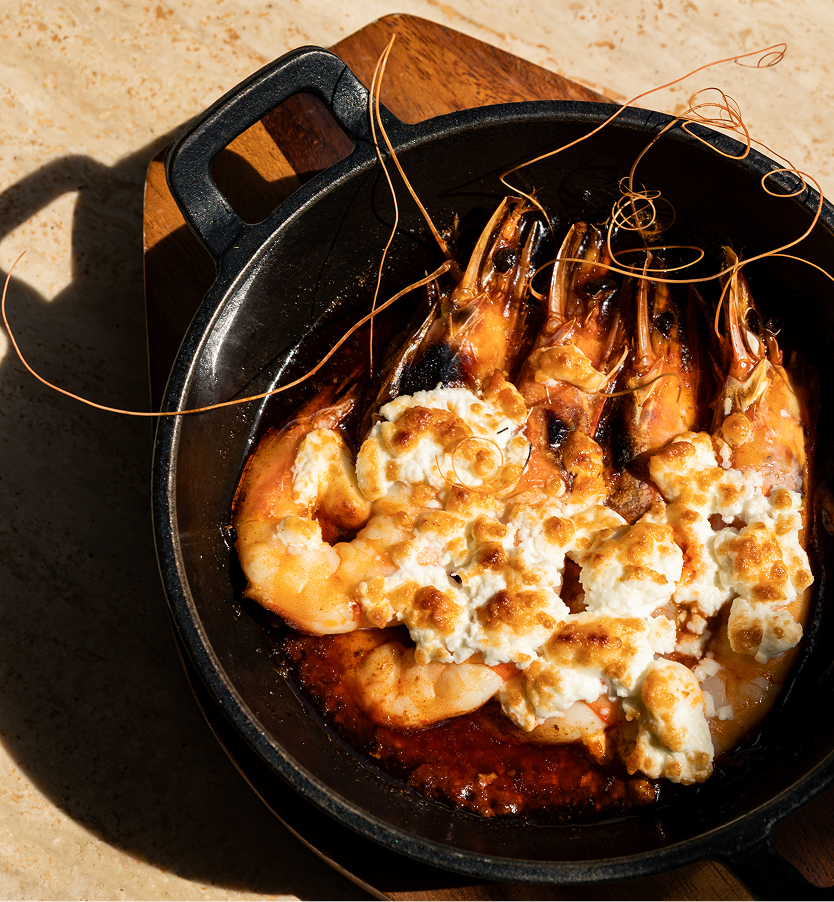
Our Greek salad pairs carob rusks and wild oregano with feta mousse, and feta also appears with aubergine, peppers and pomegranate in the melitzanosalata. It is folded into hortopita with Greek wild greens and phyllo, and paired with lobster-flavoured butter and chilli in our prawns saganaki.
Moving between fresh, spicy, vegetable-led and richer dishes, it is an ingredient that can bring something different to each plate.
Greek Wild Greens
Wild greens have long been part of Greek cooking, gathered seasonally and prepared simply in dishes that allow their distinctive flavours to come through. At Myrtos, they appear in different forms across the menu.
In our hortopita, Greek wild greens are wrapped in phyllo with feta. Elsewhere, stamnagathi – a type of chicory – is served with staka butter and lemon, allowing the greens themselves to remain at the centre of the dish.
The two preparations show different sides of the same ingredient-led approach: one folded into a familiar Greek pie, the other served simply as a dish in its own right.
Cretan Rock Samphire
Some of the ingredients on the Myrtos menu connect particularly closely with the landscape that inspires it. A case in point is Cretan rock samphire, which accompanies our bluefin tuna alongside tomatoes and capers, bringing a coastal ingredient into a fresh, pared-back dish. Rock samphire also appears elsewhere on the menu, pickled and served with poached cod, skordalia, celery, crispy shallots and cod jus.
Used in two very different ways, it moves from the freshness of the tuna dish to something richer and more layered with the cod.
Carob
Carob has a long history in Mediterranean cooking, with the pods of the carob tree dried and ground into flour. At Myrtos, it appears in the form of carob rusks in our Greek salad, bringing a deeper, subtly sweet flavour alongside feta mousse and wild oregano.
Here, carob is not simply an ingredient hidden within a recipe. The rusks contribute another texture to the dish, sitting alongside two equally recognisable Greek flavours in feta and oregano. It is a small detail, but one that shows how familiar dishes at Myrtos can retain their connection to Greek cooking while finding their own expression on the menu.
Thyme Honey
Thyme honey is one of Greece’s most distinctive honeys, produced where flowering thyme grows abundantly across the country’s dry, sun-soaked landscapes.
Aromatic and deeply fragrant, it brings a distinctly Greek note to our loukoumades – Greek donuts – which are served with crushed walnuts and Ceylon cinnamon. It is a combination that brings sweetness, spice and texture together.
From Ingredient to Plate at Myrtos
There is a simplicity at the heart of Greek cooking: good ingredients do not need to be overworked to make an impression. A squeeze of lemon, the saltiness of feta, the bitterness of wild greens or the fragrance of thyme honey can be enough to define a dish.
That thinking runs throughout the menu at Myrtos. Ingredients are given room to retain their own character, whether they are part of a familiar Greek classic or used in a less expected way.
It is this balance of familiarity and discovery that we want to bring to the table in South Kensington – flavours rooted in Greece, expressed through the cooking at Myrtos.
BOOK YOUR TABLE
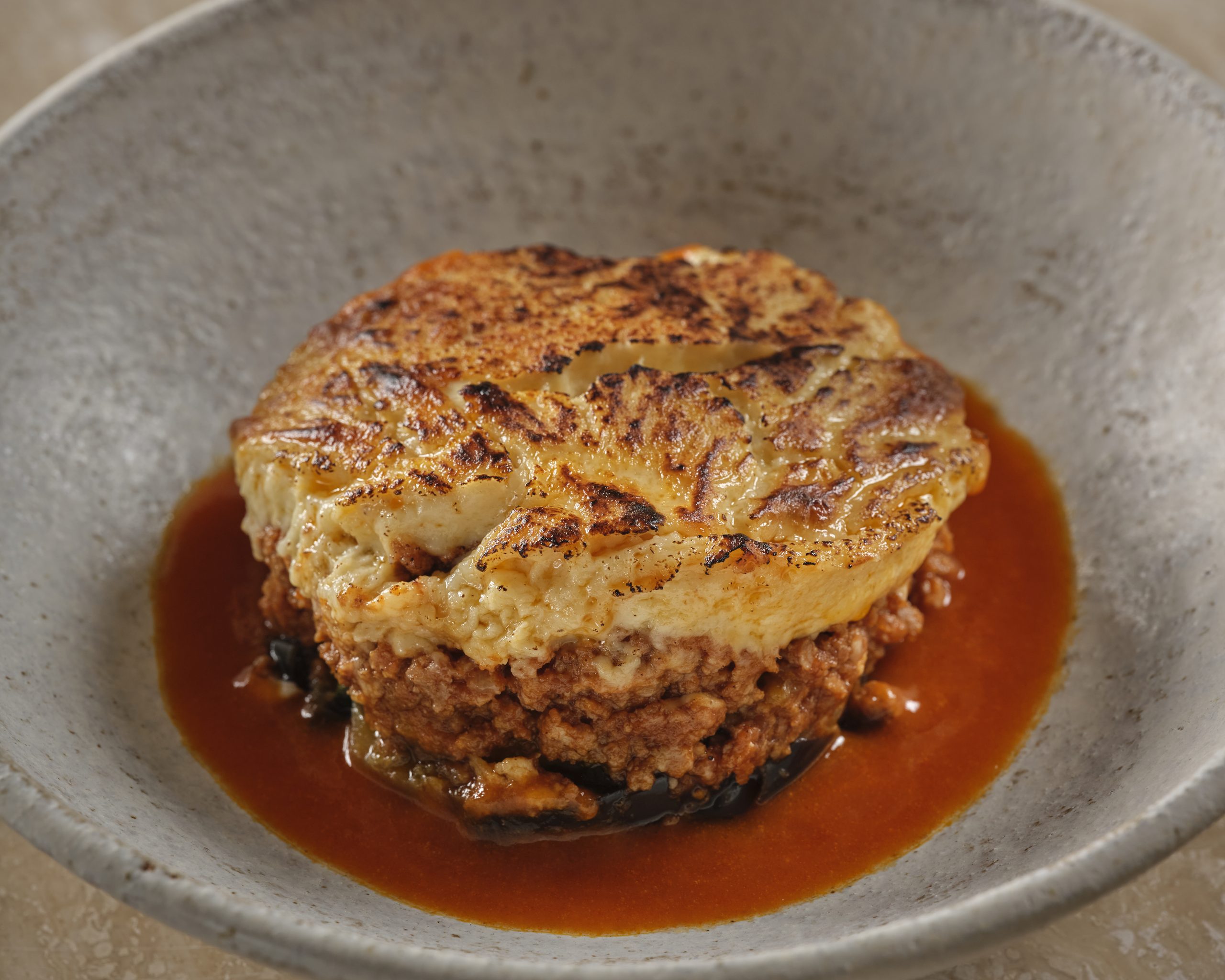
Greek Comfort Food | Moussaka at Myrtos London
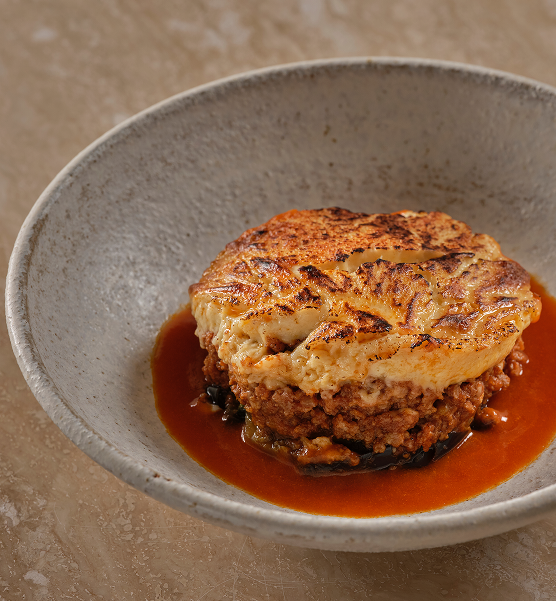
As autumn arrives in London, we find ourselves drawn towards food with a little more warmth and generosity. At Myrtos, that means familiar Greek flavours, dishes made for sharing and classics worth returning to – not least our traditional lamb moussaka.
But what is it about Greek comfort food that can feel so much like home?
Part of the answer lies beyond the dishes themselves. Greek food has a close relationship with memory and hospitality: recipes and flavours we return to, food passed around the table and meals that are given time to unfold.
At Myrtos, those ideas come together in the way we cook and the way we eat. This autumn, we’re exploring the flavours we return to, the enduring comfort of a classic moussaka and why sharing a meal can be just as important as what is on the plate.
The Flavours We Return To
Comfort food is deeply personal. It might be something cooked by a parent or grandparent, a dish associated with a particular place, or simply a combination of flavours you have known for years. What these foods often share is a sense of familiarity. There is comfort in knowing a dish before it arrives and recognising the flavours and textures that make it what it is.
In Greek cooking, that familiarity is closely connected with hospitality. At Myrtos, we return to the idea of philoxenia: the warmth and generosity shown towards guests, and the understanding that sharing food is about more than simply what is on the plate.
It is why the table matters. Food is passed around, another plate is ordered, another glass poured. The meal becomes something experienced together.
It is also where food and memory meet. Certain dishes stay with us not only because of how they tasted, but because of where we were, who we shared them with and how it felt to sit around that table.
Moussaka, the Traditional Way
Few dishes capture the comfort and familiarity of Greek cooking quite like moussaka.
At Myrtos, our lamb moussaka is served the non-deconstructed, traditional way. Rich, generous and deeply familiar, it is a dish that needs little reinvention – its comfort lies in being exactly what you hope it will be. Made to be savoured slowly, it is the kind of food that invites you to settle in and enjoy the simple pleasure of a much-loved Greek classic.
Our moussaka has also attracted some memorable praise. Writing in the Financial Times, Jay Rayner said: “I doubt there’s a better moussaka to be had in London.”
For anyone searching for moussaka in London, perhaps that is part of the pleasure of finding it at Myrtos: a familiar Greek favourite, served as it should be.
Made for the Middle of the Table
That feeling of generosity extends beyond moussaka. Our menu takes inspiration from Greece, its islands, mainland, mountains and traditions, with dishes that naturally lend themselves to sharing.
Whole lobster giouvetsi brings lobster together with orzo, mussels, tomato, lemon and basil, while grilled lamb chops are served with coconut tzatziki. Both are sharing mains, made to arrive at the centre of the table rather than belong to just one person.
And there is something inherently comforting about eating this way. Passing plates, tasting from the same dishes and ordering for the table changes the rhythm of a meal. Dinner becomes less about individual courses and more about the experience of sitting down together. It is a simple kind of generosity, and one that feels distinctly Greek.
Bringing the Warmth of Greece to London
As autumn settles over London, there is a natural pull towards dishes with a little more warmth and depth.
At Myrtos, that might be poached cod with chickpeas, burned leek stew and aniseed; grilled poussin with oregano glaze, fingerling potatoes and roasted wing jus; or Greek wild greens with staka butter and lemon. They are very different dishes, but each brings something comforting to the table – from the depth of a slow-cooked stew and roasted jus to the simplicity of greens with butter and lemon.
For us, Greek comfort food is not simply about warmth or richness. It is the combination of familiar flavours, generous dishes and the people gathered around them.
At our Greek restaurant in South Kensington, we want that feeling to extend beyond the food itself: a table to settle into, dishes to pass around and an evening that never feels rushed.
Because perhaps that is why certain food feels like home. We remember the dish, but we also remember the table around it.
BOOK YOUR TABLE
The Art of Philoxenia | Greek Hospitality at Myrtos London
Some words reveal more than their translation ever could. Philoxenia is one of them.
Often translated simply as “hospitality”, the word combines philos (friend) and xenos (stranger), meaning “friend to the stranger”. It describes a way of welcoming others with warmth, generosity and openness, whether they are lifelong friends, neighbours or first-time visitors.
This philosophy has shaped Greek culture for centuries, influencing the way people gather, celebrate and, perhaps most noticeably, the way they eat. In Greece, sharing a meal is rarely just about food. It is about making time for one another, creating conversation and ensuring everyone at the table feels welcome – a tradition that continues to define Greek hospitality today and remains at the heart of the experience at Myrtos.
What Does Philoxenia Mean?
The concept of philoxenia dates back to Ancient Greece, where welcoming travellers was considered both a moral duty and a sign of respect. Long before hotels and restaurants existed, visitors often relied on the kindness of strangers for food, shelter and safety. Offering hospitality wasn’t viewed as an act of generosity alone – it was part of everyday life and reflected the values of the community.
Although the world has changed considerably since then, the spirit of philoxenia remains deeply woven into modern Greece. Whether you’re invited into someone’s home, stopping at a family-run taverna or visiting a small village on one of the islands, you’ll often find the same instinctive generosity. Guests are encouraged to eat well, stay a little longer and leave feeling cared for.
For many visitors, it’s the warmth of the people – and the conversations shared around the table – that leave the strongest impression.
Why Greek Hospitality Begins Around the Table
Food has always been central to Greek hospitality because it creates an opportunity to bring people together.
Across Greece, meals are occasions rather than routines. Family lunches bring several generations together on Sundays, neighbours drop in unannounced for coffee, and celebrations almost always revolve around a generously laid table. Even the simplest meal is treated as an opportunity to spend time together.
There is an old saying in Greece that every guest should leave happier than when they arrived. While every family has its own traditions, the intention is always the same: make people feel comfortable, welcomed and well fed.
That generosity explains why hosts encourage guests to take another helping, try a favourite family recipe or accept a homemade sweet before leaving.
Why Greek Meals Are Never Rushed
Unlike dining cultures where meals are often squeezed between appointments or eaten on the move, Greek dining tends to unfold at its own pace. Lunch can easily become an afternoon spent talking with family, while dinner often stretches late into the evening as conversation continues long after the final course.
There is little sense of urgency. Instead of asking for the bill as soon as dessert is finished, diners often remain at the table over coffee, fruit or a glass of wine, allowing conversations to continue naturally. This slower rhythm reflects the wider Mediterranean lifestyle, where relationships are prioritised over schedules and quality time is valued as highly as quality food.
Birthdays, family gatherings, celebrations and everyday catch-ups all happen around the same table. Food provides the reason to gather, but conversation is what makes people stay.
For visitors, this relaxed pace often feels refreshing. It offers permission to slow down, enjoy each course and appreciate that dining can be as much about the people around the table as the dishes themselves.
Sharing Food, Sharing Conversation
Another defining feature of authentic Greek cuisine is the way it is served.
Rather than ordering individual meals, tables are typically filled with dishes for everyone to share. Fresh salads, grilled seafood, seasonal vegetables, warm breads and meze are placed in the centre, allowing each person to take a little of everything. Sharing food naturally encourages conversation. People recommend favourite dishes, pass plates across the table and discover new flavours together.
It’s a style of eating that has inspired the popularity of sharing plates in London, but in Greece it has always been part of everyday life.
Hospitality as Part of Greek Culture
Philoxenia extends far beyond restaurants and family dining tables. It shapes countless everyday interactions throughout Greece.
Visitors are often greeted with genuine curiosity and warmth, whether they’re arriving at a local café, checking into a family-run guesthouse or simply asking for directions in a village square. Hospitality is less about formal service and more about making people feel comfortable.
This tradition is closely connected to another important Greek value: philotimo, a concept centred on honour, kindness and doing the right thing because it is the right thing to do. Together, these values encourage generosity without expectation and foster a strong sense of community.
You may also come across the word kerasma, a Greek tradition of offering guests a complimentary coffee, sweet or small bite to eat. It’s a simple gesture, but one that perfectly captures the generosity at the heart of philoxenia.
Many of the customs associated with Greek traditions reflect these values. A guest may be welcomed with a glass of water before ordering, offered fresh fruit or a homemade sweet after a meal, or encouraged to stay for one more coffee before leaving.
Bringing Philoxenia to London
At Myrtos, philoxenia is more than a guiding principle; it shapes every guest experience, from the warm welcome at the door to the shared moments around the table. Every detail is designed to create an atmosphere where guests feel welcomed with the warmth and generosity that have long defined Greek hospitality. The menu honours traditional Greek recipes while presenting them through a contemporary lens, inspired by the seasonal ingredients and landscapes that continue to influence Greek culinary tradition.
Dining at Myrtos reflects the same unhurried approach found across Greece, encouraging guests to share dishes, enjoy conversation and savour the occasion together. In a busy city where meals are often hurried, Myrtos offers a different pace – one inspired by the traditions of Greece and the enduring values of philoxenia.
Experience Greek Hospitality for Yourself
Philoxenia has remained at the heart of Greek culture for generations, reminding us that hospitality is about far more than service. It’s reflected in the way meals are shared, guests are welcomed and time is made for conversation.
Whether you’re discovering Greek food in London for the first time or looking for an authentic Greek restaurant, Myrtos offers a dining experience inspired by the traditions of Greece. Through authentic Greek cuisine, thoughtful hospitality and a deep respect for Greek heritage, every meal reflects the enduring spirit of philoxenia.
BOOK YOUR TABLE
Best Business Lunch in South Kensington | Myrtos London
A business lunch doesn’t have to feel like an extension of the office. At Myrtos, there’s time to settle around the table, order a few dishes and talk over lunch without feeling hurried. It’s an approach rooted in philoxenia – the Greek tradition of welcoming people with warmth and generosity.
For meetings, client entertaining or catching up with colleagues, Myrtos offers a more relaxed approach to a business lunch in South Kensington. And with the weekday menu available from 12 to 5pm, there is flexibility for an early meeting, a traditional lunchtime booking or an afternoon that allows a little more time.
What Makes the Perfect Business Lunch?
The best business lunches rarely feel too much like business. The details still matter: a comfortable setting, attentive service and a menu that works just as well for a quick meeting as it does for a longer lunch. But the best ones also give you the chance to step away from the usual working-day routine.
Around the table, conversation tends to take on a different pace. There is time to talk properly, share good food and enjoy the occasion without the formality of a meeting room.
It’s an approach that sits naturally with Greek dining culture, where time spent around the table is as much about conversation and company as it is about the food itself.
Greek Hospitality at the Table
There is a Greek word that sits at the heart of the Myrtos experience: philoxenia. Often translated as hospitality, its meaning goes further, carrying the idea of welcoming others with generosity and warmth. At Myrtos, it shapes an approach to dining that feels attentive without being formal and relaxed without losing a sense of occasion.
For a business lunch, that distinction matters. Entertaining a client, meeting a colleague or catching up with someone from across the city does not need to mean a stiff dining room or a rushed meal. Instead, lunch can simply be a chance to settle around the table, talk properly and enjoy the time you have.
The Weekday Lunch Menu at Myrtos
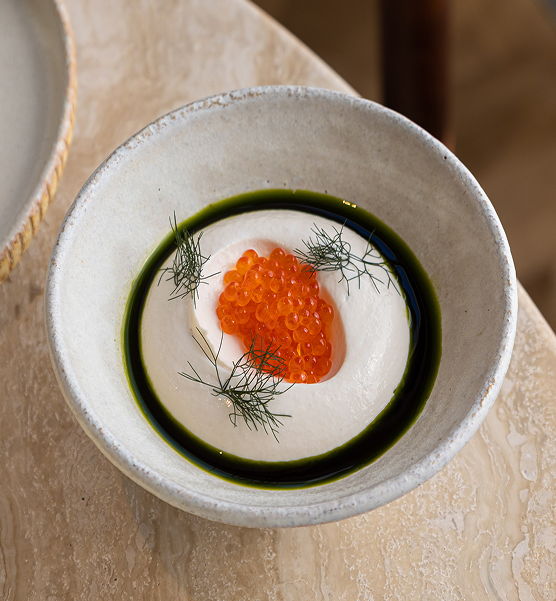
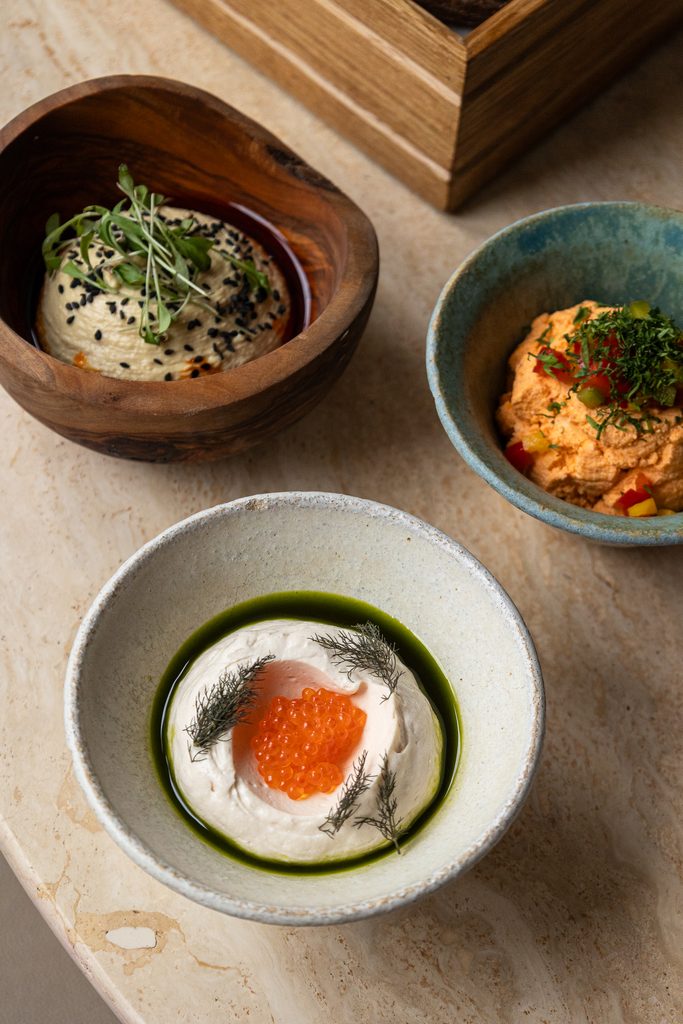
The weekday lunch menu at Myrtos offers two courses for £25 or three for £29, available Monday to Friday from 12 to 5pm. It brings together familiar Greek dishes and contemporary interpretations. Begin with taramosalata with smoked cod roe, trout roe and dill oil; hortopita filled with Greek wild greens and feta; or dolmadakia with avgolemono and wild fennel.
Dips and small plates can be added to the table, bringing some of the conviviality of Greek dining to a working lunch – from tirokafteri with spicy feta and Greek yoghurt to melitzanosalata with aubergine, peppers, pomegranate and feta.
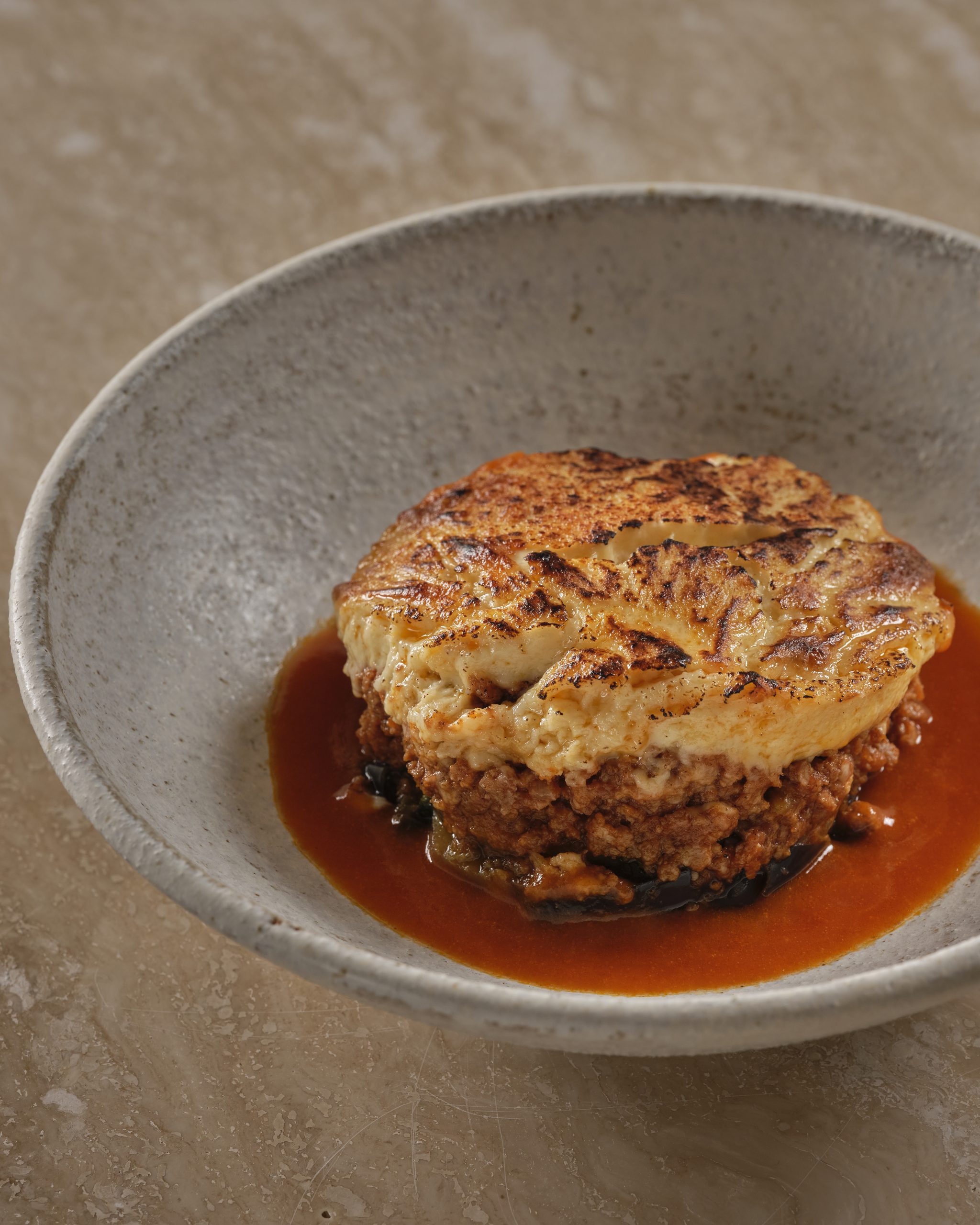
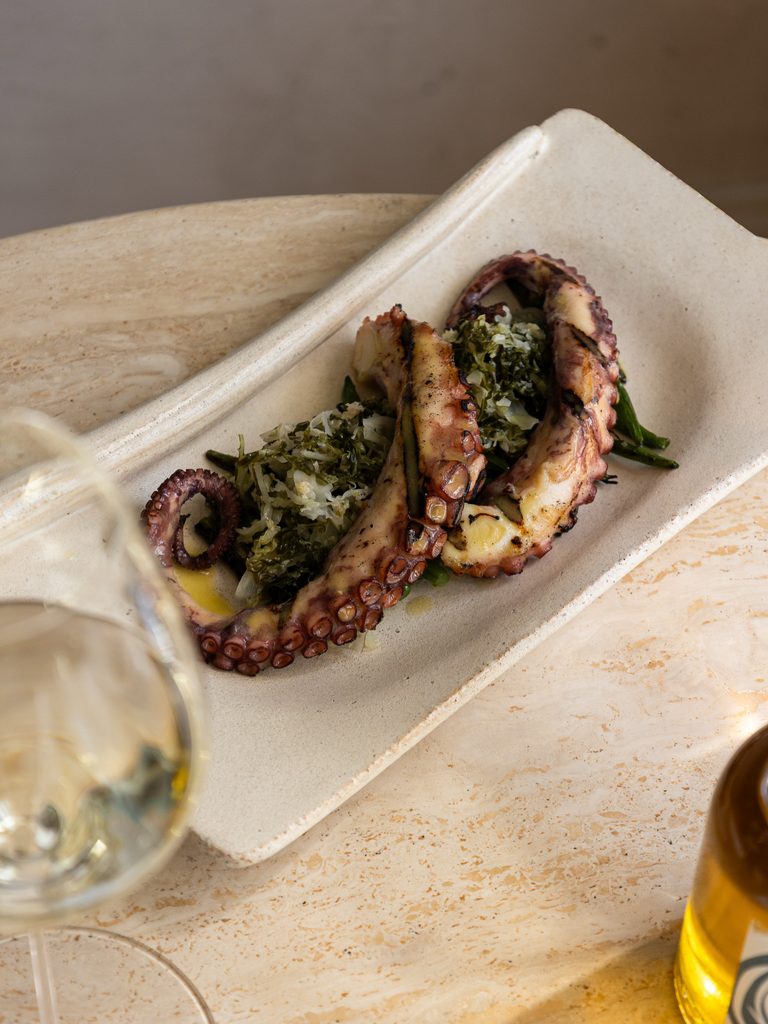
For the main course, there is Lamb Moussaka served the traditional, non-deconstructed way, alongside Grilled Octopus with flamed green beans and fermented savoy cabbage, and Greek Salad with carob rusks, feta mousse and wild oregano.
Those with time for something sweet can finish with Portokalopita, an orange syrup-soaked phyllo cake with kaimaki ice cream, or Loukoumades with thyme honey, crushed walnuts and Ceylon cinnamon.
Two courses work easily within the working day; three leave a little more time to settle in, continue the conversation and enjoy lunch at a slower pace.
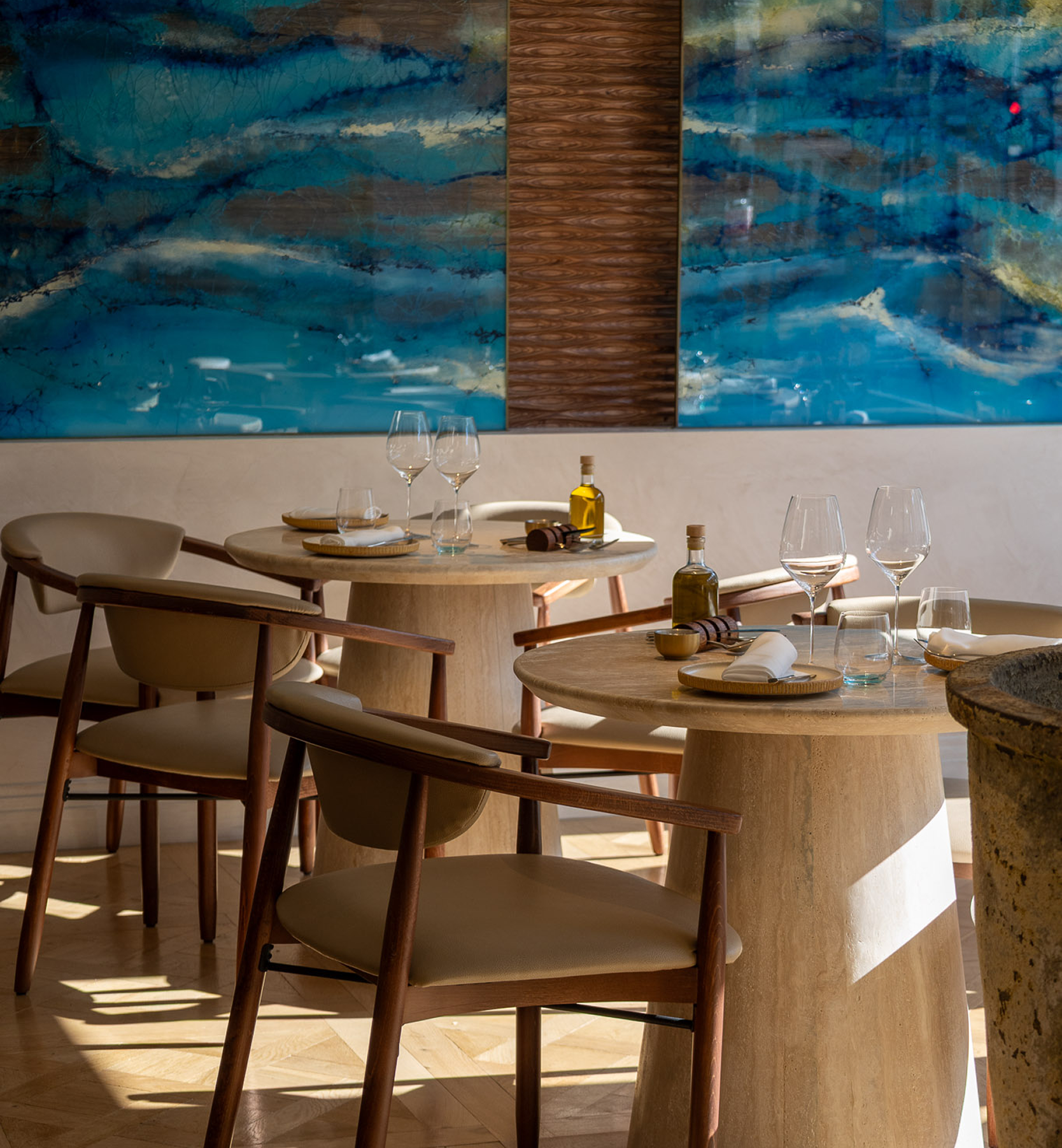
A Business Lunch in South Kensington, at a Different Pace
London has a habit of making lunch feel like something to fit between everything else. Myrtos offers a different rhythm.
The restaurant’s approach is grounded in the Greek pleasure of slowing down, sharing food and giving conversation time to unfold. That does not mean every lunch needs to stretch into the afternoon. It simply means that while you are at the table, there is no need for it to feel hurried.
For meetings, client entertaining or a long-overdue catch-up with colleagues, it makes for a business lunch that feels considered without becoming formal. And when the diary allows, there is always time for one more coffee.
BOOK YOUR TABLE
A Glass of Greek Wine
For lunches that call for a glass of wine, there is plenty to choose from. The Myrtos wine list travels across Greece, with producers from the Peloponnese and Attica to Crete, Santorini and Macedonia. Indigenous varieties such as Assyrtiko, Moschofilero, Xinomavro and Agiorgitiko bring the character of these different regions to the table.
There is a strong sense of place behind the selection, with an emphasis on ethical sourcing and wineries committed to sustainable viticulture, traditional craftsmanship and careful winemaking. The result is a list that celebrates the breadth of Greek wine while staying close to the vineyards and people behind each bottle.
Many are also available by the glass, making it easy to try something alongside lunch – whether a crisp Assyrtiko, aromatic Moschofilero or silky Xinomavro as the conversation continues.
The Greek Harvest | From Vineyard to Table at Myrtos London
In Greece, September signals a change. The heat of summer begins to soften, the landscape takes on a different rhythm and, across the country’s vineyards, one of the most important moments in the agricultural calendar begins: the grape harvest.
Known in Greek as trygos, the harvest is about much more than gathering grapes from the vine. For generations, it has brought families, friends and neighbours together, connecting the food and wine on the table with the land from which they came.
As the weeks pass and autumn settles in, attention begins to turn towards another enduring symbol of Greece: the olive tree.
Together, grapes and olives tell a much larger story about Greek food and culture – one shaped by the seasons, a respect for nature and the pleasure of sharing what the land provides.
September and the Greek Grape Harvest
September has traditionally been the month of the wine grape harvest in Greece, although the exact timing varies according to region, grape variety and the growing conditions that year.
Historically, trygos was a collective effort. Family members, friends and neighbours would come together to work in the vineyards, beginning early in the day to gather ripe grapes before taking them to be pressed.
The work was demanding, but the harvest was also a social occasion. At midday, those working in the vineyard would gather to eat together, sharing food and discussing the quality of the year’s crop. Once the grapes reached the wine press, there was another opportunity for food, drink and celebration.
It is this combination of work, food and community that gives trygos such a distinctive place in Greek culture. The harvest was not separate from everyday life; it was woven into it.
Wine would eventually return to the table, ready to accompany the gatherings, celebrations and quieter everyday meals of the year ahead.
From the Vineyard to the Olive Grove
As the grape harvest draws to a close, another begins to approach. Olive harvesting in Greece generally starts in October, depending on the variety and region, and continues through the autumn and into winter. Green olives are typically among the first to be gathered, with other varieties left on the tree for longer as they mature.
Olive trees have been cultivated in Greece since antiquity, and over centuries the tree has come to represent far more than a source of food. It appears throughout Greek history and mythology as a symbol of peace, wisdom and prosperity, while its fruit and oil have remained constants in Greek kitchens.
The olive harvest, like the grape harvest before it, has traditionally been a communal activity. It requires time and patience, and once the work is complete, food and celebration naturally follow.
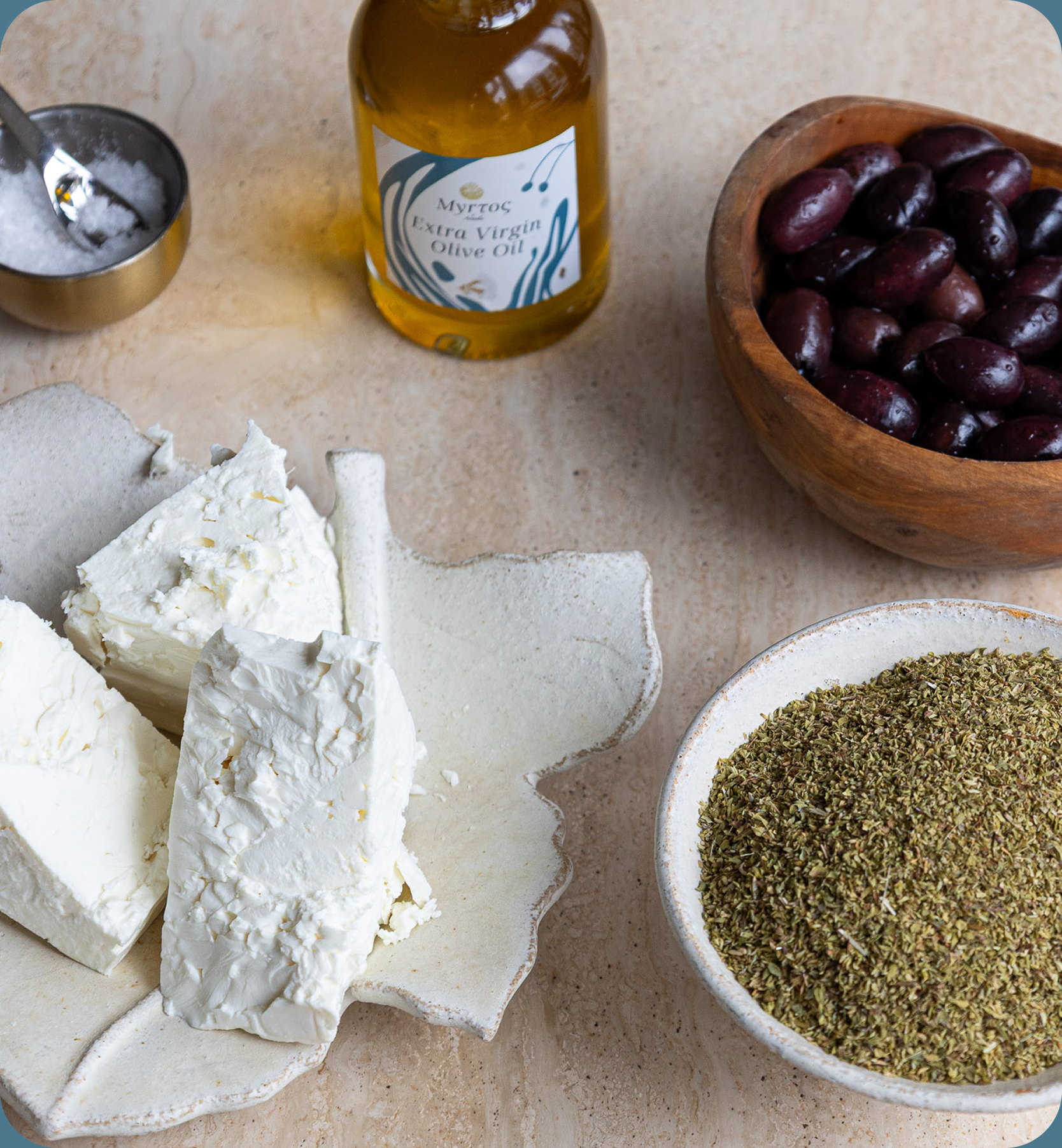
From fruit on the branch to freshly pressed oil, it is another reminder of the close relationship between Greek cooking and the landscape. Olive oil remains fundamental to that relationship, often used simply alongside lemon, herbs and seasoning to let the character of an ingredient speak for itself.
Eating with the Seasons
Harvest time is a particularly visible expression of something that has always been fundamental to Greek food: seasonality.
The landscape changes throughout the year, and the ingredients available change with it. Rather than seeing those limitations as restrictive, traditional cooking developed around them. What grew nearby and what was ready to be gathered naturally found its way onto the table.
This creates a cuisine closely connected to place. Coastal regions have their own traditions; the mountains and mainland have others. Across Greece’s islands, local landscapes, climate and agriculture have each helped shape distinctive ways of cooking.
Seasonality also encourages anticipation. Ingredients appear, are enjoyed at their best, and then make way for what comes next. September sits at a particularly interesting point in that cycle: summer has not entirely disappeared, but autumn is beginning to make itself known. The grape harvest captures that moment perfectly.
What begins in the vineyard or olive grove eventually finds its way to the table. Grapes become wine, olives become oil, and the work of one season becomes part of the meals and gatherings that follow – a relationship between landscape and season that remains central to Greek food culture and continues at Myrtos.
The Greek Landscape at the Myrtos Table
At Myrtos, the relationship between landscape and table can be found in both the food and wine. Seasonal produce and natural ingredients sit at the heart of the menu, while the wine list looks to vineyards across Greece and the distinctive varieties that grow there.
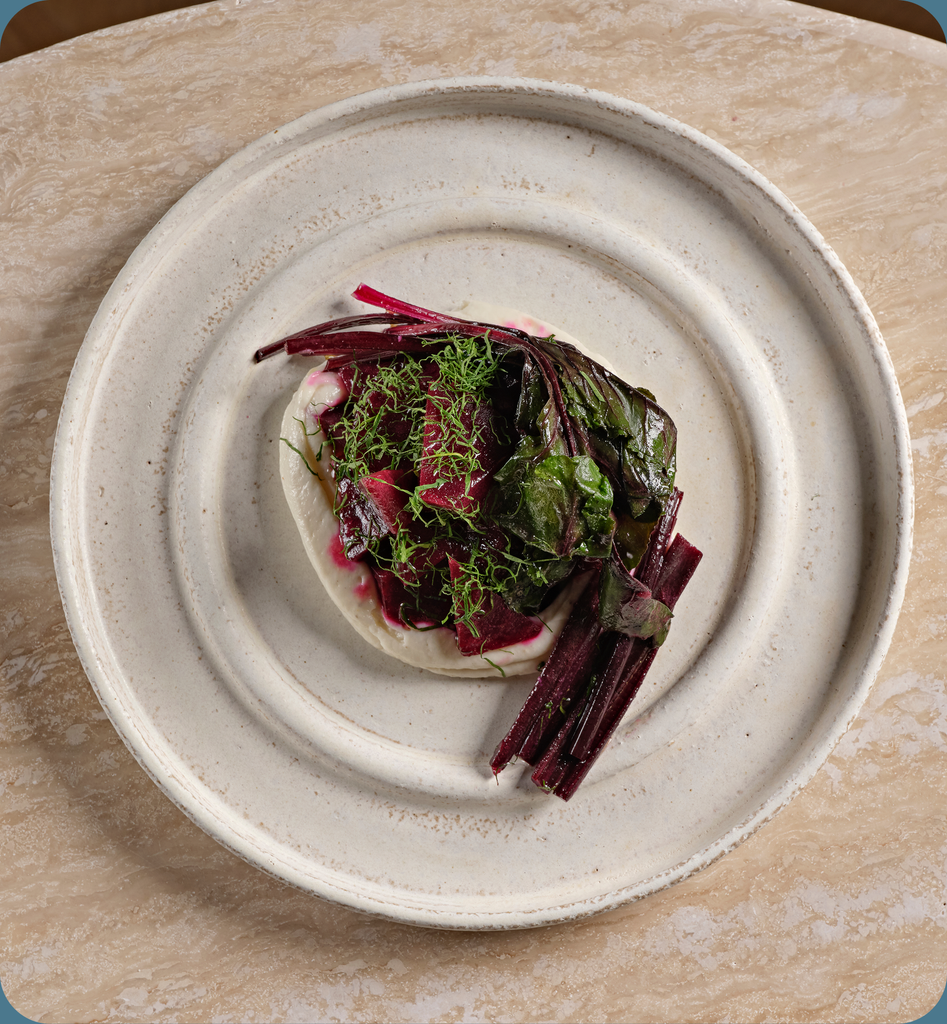
Beetroot is served with its leaves, crushed walnuts and goat’s cheese; wild greens are folded into hortopita with phyllo and feta; while dolmadakia are paired with avgolemono and wild fennel. Alongside them, the wine list travels through Greece, from Assyrtiko grown on Santorini and Xinomavro from Naoussa to Moschofilero from the Peloponnese and wines from Crete and Kefalonia.
Each has its own connection to place. Greece’s varied landscapes and climates shape what is grown, while the Myrtos wine list works with producers committed to sustainable viticulture and careful winemaking, allowing the character of the vineyard and its origins to come through.
Together, food and wine tell a story shaped by the seasons and the Greek landscape – one that begins in the vineyard and continues around the table.
BOOK YOUR TABLE
Five Mediterranean Ingredients That Capture the Spirit of a Greek Summer
There are certain flavours that have the remarkable ability to transport us. A drizzle of fragrant olive oil over warm bread. The sweetness of a perfectly ripe tomato. Fresh seafood simply grilled over charcoal. The perfume of wild herbs carried on a sea breeze. The brightness of a freshly squeezed lemon. Together, these ingredients capture the essence of a Greek summer.
Across Greece, food has always been shaped by the landscape; mountains covered in aromatic herbs, olive groves stretching towards the coastline, fishing boats returning with the morning’s catch, and gardens bursting with sun-ripened produce all influence what appears on the table. The beauty of Mediterranean cooking lies in allowing exceptional ingredients to speak for themselves.
At Myrtos, this same philosophy shapes every dish. Inspired by the landscapes of Greece and childhood memories of Kefalonia, the menu celebrates the ingredients at the heart of Greek cooking.
Extra Virgin Olive Oil: The Foundation of Mediterranean Cooking
If Greek cuisine has one defining ingredient, it is extra virgin olive oil. Across Greece, it is at the heart of almost every meal bringing richness, balance and depth to even the simplest dishes.
Families have passed down olive groves through generations, harvesting each autumn before pressing the fruit into vibrant, peppery oils that become the foundation of countless recipes.
In Mediterranean cooking, olive oil rarely plays a supporting role. It dresses vegetables, enriches salads, finishes grilled fish and brings warmth to slow-cooked dishes. Its flavour is both subtle and distinctive, enhancing ingredients rather than masking them.
Unsurprisingly, olive oil features throughout the Myrtos menus. For example, our pink bream and seabass is dressed with extra virgin olive oil and orange, complementing rather than overpowering the fish, while our Kefalonian organic sea bass is served simply with extra virgin olive oil and lemon – proof that delicious food needn’t be overcomplicated.
Greek Tomatoes: Sunshine in Every Bite
Few ingredients capture the spirit of Greek summer food quite like tomatoes. Under the Mediterranean sun, tomatoes develop remarkable sweetness, balanced by vibrant acidity and an unmistakable freshness. Whether enjoyed simply sliced with sea salt, combined with creamy feta, or slowly roasted until intensely rich, Greek tomatoes are a reminder that the best ingredients need very little to shine.
At Myrtos, ripe tomatoes are the jewels of our Greek salad, where they are paired with carob rusks, feta mousse and wild oregano. Or for a richer option, order the Prawns Saganaki – it transforms tomatoes into a deeply savoury sauce with lobster butter, chilli and feta. The two dishes show just how versatile one simple ingredient can be.
Fresh Seafood: A Celebration of the Sea
With thousands of kilometres of coastline and countless islands scattered across the Ionian and Aegean Seas, it is no surprise that seafood has always played such an important role in Greek cuisine.
The day’s catch requires little embellishment. A touch of olive oil, a squeeze of lemon and perhaps a scattering of herbs is often all that is needed.
This philosophy is reflected throughout the menu, from our grilled octopus served with flamed green beans and fermented savoy cabbage, to the half grilled Greek sea bream delicately finished with Mediterranean herbs and avgolemono. The whole lobster giouvetsi, teamed with orzo, tomatoes and basil, celebrates the generous spirit of sharing that defines long Greek meals.
By using sustainably sourced British seafood, Myrtos stays true to the Greek belief that great cooking begins with exceptional ingredients.
Wild Herbs: The Fragrance of the Greek Landscape
Walk through the hillsides of Greece during summer and the air is filled with beautiful aromas. Wild oregano grows between sun-warmed rocks, thyme carpets the mountainsides, and rosemary, sage and other Mediterranean herbs flourish naturally across the landscape, shaped by sea breezes and warm sunshine.
These herbs do more than season food – they tell the story of the places they come from. Authentic Greek cooking often uses herbs with remarkable restraint. Few carefully chosen ingredients bring natural character to every dish.
Lemons: Brightness That Brings Everything Together
Across Greece, fragrant lemons grow in home gardens and orchards, thriving in the Mediterranean climate. Their thick, aromatic skins are prized as much for their zest as their juice, adding freshness and fragrance to everything from seafood and vegetables to cakes and preserves.
Their bright acidity cuts through richness, lifts seafood, enhances vegetables and brings balance to even the simplest dishes. It’s a flavour you’ll find throughout the Myrtos menu, where lemon is used to lift seafood, brighten vegetables and bring balance to classic Greek dishes such as avgolemono.
A Greek Summer at Myrtos
Olive oil, tomatoes, fresh seafood, wild herbs and lemons have shaped Greek cooking for generations. At their best, they don’t need complicated techniques or long ingredient lists – just care, balance and a respect for where they come from.
At Myrtos, this philosophy is brought to every dish, drawing on the traditions of Kefalonia and a deep respect for seasonal produce.Whether it’s a classic Greek Salad, traditional Lamb Moussaka or freshly prepared seafood, the ingredients remain at the centre of the story.
BOOK YOUR TABLE
Summer Pairings at Myrtos: The Art of Sharing Food, Wine and Conversation
From crisp Greek whites served alongside the freshest seafood to refreshing cocktails enjoyed over mezze, the right pairing has the power to transform a meal. At Myrtos, every wine and cocktail has been carefully chosen to complement Myrtos’ contemporary Greek menu, celebrating the flavours, landscapes and traditions that have shaped Mediterranean dining for generations.
In Greece, food and drink have always been enjoyed together. Meals unfold slowly, with dishes shared across the table, glasses refilled and conversation lingering long after the final course. Inspired by this tradition, our menus invite guests to savour every moment, whether it’s a leisurely summer lunch, an aperitif before dinner or an evening spent discovering the harmony between exceptional food and thoughtfully selected wines.
In this journal, we explore some of our favourite summer pairings, from indigenous Greek wines and seasonal seafood to signature cocktails and sharing plates, and how they come together to capture the warmth of Greek hospitality in the heart of South Kensington.
A Celebration of Greek Wine
Greece is one of the world’s oldest wine-producing countries, yet many of its most remarkable grape varieties remain a hidden gem for wine lovers. At Myrtos, our wine list invites guests to explore this rich diversity, showcasing indigenous varieties from celebrated regions across the country, from the volcanic vineyards of Santorini to the rolling hills of the Peloponnese and the Ionian island of Kefalonia.
From the mineral freshness of Assyrtiko to the floral elegance of Moschofilero and the aromatic character of Malagouzia, these indigenous varieties reveal the breadth and elegance of modern Greek winemaking.
White Wines and Summer Seafood
Fresh seafood and crisp white wine have always been natural companions.
One of Greece’s most celebrated grape varieties, Assyrtiko, is renowned for its vibrant acidity and distinctive mineral character. It pairs beautifully with seafood, allowing delicate flavours to shine while complementing citrus, herbs and extra virgin olive oil. Our grilled octopus, served with flamed green beans and fermented savoy cabbage, is a wonderful example. The smoky notes of the octopus are lifted by a bright, mineral white wine, creating a pairing that feels truly balanced.
For lighter dishes such as our pink bream or seabass crudo, dressed simply with orange, extra virgin olive oil and hand-picked Afrala salt, aromatic Greek varieties such as Moschofilero offer freshness and delicate floral notes without overwhelming the fish.
Like the dishes themselves, the best pairings don’t overpower – they bring balance, allowing the freshness of the seafood, the brightness of citrus and the character of each wine to shine together.
Rosé: Made for Long Summer Lunches
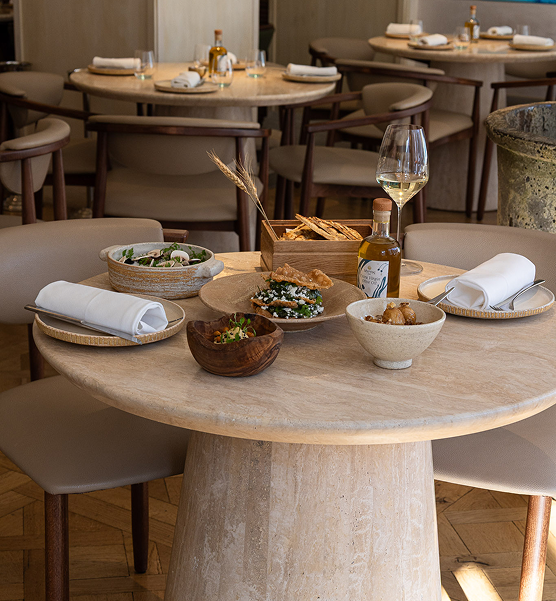
Few wines capture the feeling of summer quite like a chilled glass of rosé. Elegant, refreshing and remarkably versatile, rosé bridges the gap between seafood, vegetables and lighter meat dishes, making it one of the most enjoyable choices for sharing several courses.
Our Greek rosé selection includes our House Rosé from Evia alongside bottles such as Principessa from the Peloponnese and Skouras Cuvée Prestige Rosé, each offering its own expression of the Greek landscape.
Rosé pairs beautifully with many of our seasonal dishes, from a vibrant Greek salad to Hortopita, our crisp phyllo pie filled with wild Greek greens and feta. It also complements the rich tomato and feta flavours of our prawns saganaki, offering freshness that balances every bite.
Beginning the Evening with a Cocktail
Alongside our wine list, our signature cocktails offer another way to explore the flavours of Greece. Developed in collaboration with Line, the acclaimed Athens bar renowned for its creativity and craftsmanship, our cocktail menu celebrates Greek spirits, seasonal produce and contemporary techniques.
For summer evenings, the Limoncello Spritz offers bright citrus notes layered with elderflower, chamomile and tonic, while the Orange Blossom Collins combines mastiha spirit with white peach, lavender and jasmine soda for a refreshing Mediterranean twist. For a more savoury serve, the Mediterranean Martini balances Kalamata olive and lemon thyme with Mediterranean gin and dry vermouth.
Enjoyed alongside warm pita, freshly baked sourdough and a selection of our house dips – think silky taramosalata, smoky melitzanosalata and whipped tirokafteri – it’s a relaxed way to begin an evening with friends.
The Joy of Sharing
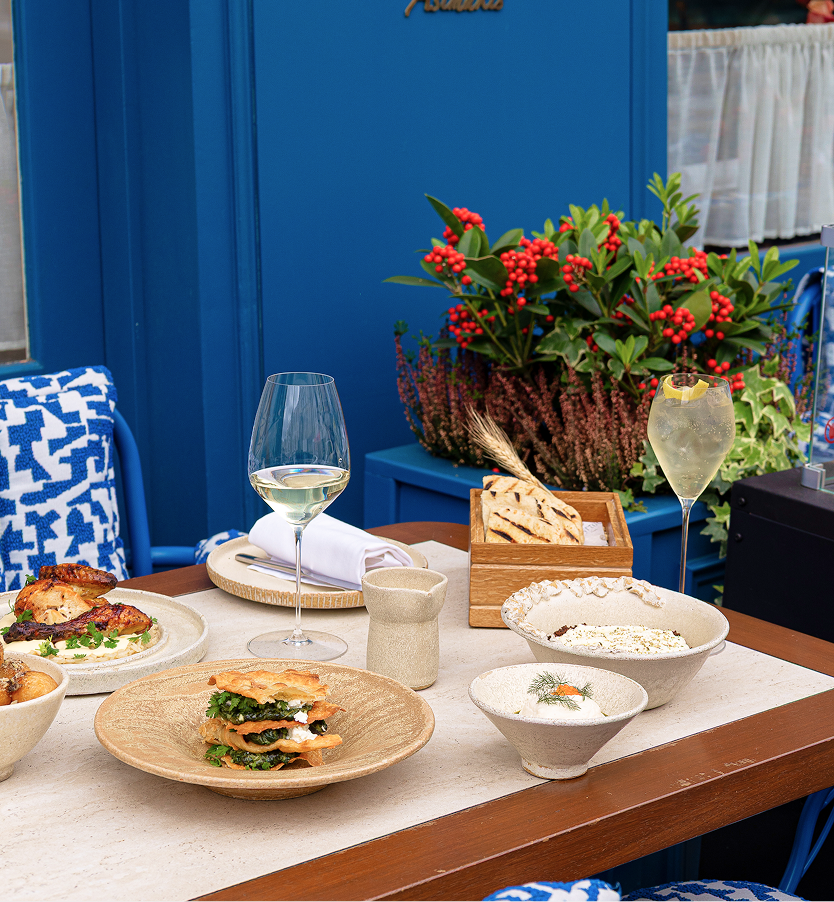
One of the defining features of Greek dining is that no single dish takes centre stage. Instead, the table gradually fills with colourful plates, each offering a different flavour, texture and story. Sharing encourages conversation, curiosity and discovery, creating opportunities to enjoy different wines and pairings as the meal unfolds.
You might begin by sharing Theodore’s tiropita and dolmadakia alongside Limoncello Spritzes, before moving on to a glass of Malagouzia with our poached cod fillet. As the table fills with more dishes, a bottle of Vallianatos ‘Aposperitis’ from Kefalonia or a Xinomavro from Naousa is passed around just as naturally, accompanying our traditional lamb moussaka or a whole Kefalonian organic sea bass, baked in salt and finished with extra virgin olive oil and lemon. It’s a style of dining that celebrates sharing – not only plates, but wines, stories and the simple pleasure of discovering new flavours together.
Dining Al Fresco, the Mediterranean Way
As the days grow longer, there’s no better way to enjoy the season than dining al fresco. A chilled glass of Greek wine, a table filled with dishes to share and the warmth of a summer evening are at the heart of the Mediterranean way of life.
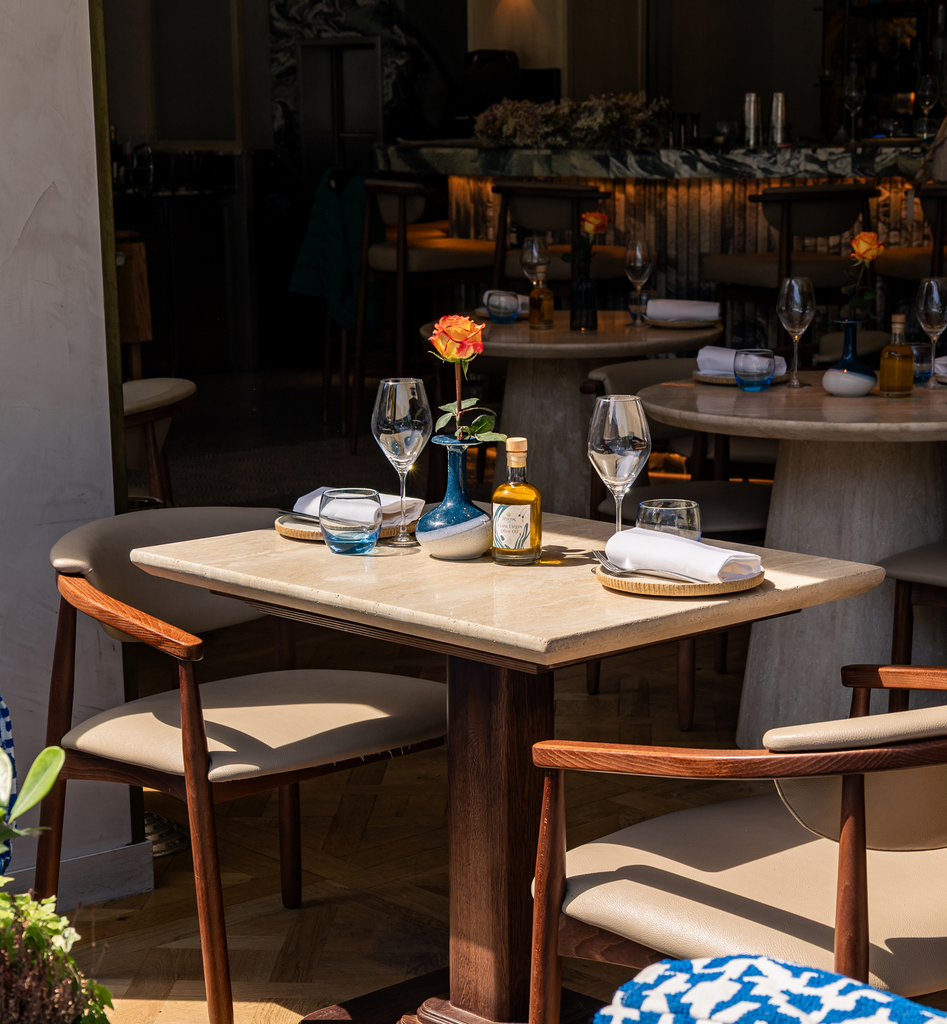
That same spirit comes to life on the Myrtos terrace. Settle in with a refreshing cocktail, explore a bottle from our Greek wine collection and enjoy seasonal dishes designed for sharing. Whether you’re escaping the city for a relaxed lunch or gathering with friends on a warm summer evening, it’s an invitation to savour the season, one course and one glass at a time.
Gather Around the Table
The perfect pairing isn’t simply about matching a wine to a dish. It’s about the atmosphere that surrounds it: friends passing plates across the table, discovering a new bottle together and taking the time to savour every course.
That’s the experience we hope to create at Myrtos. From indigenous Greek wines and signature cocktails to seasonal dishes, every element of the menu has been designed to be enjoyed together.
Whether you’re joining us on the terrace for a leisurely lunch or gathering with friends for a long summer evening, we invite you to discover your own favourite pairings and embrace the slower rhythm of Mediterranean dining.
BOOK YOUR TABLE
Lunch Set Menu in London: Discover the Joy of a Long Greek Lunch at Myrtos
When was the last time you truly paused for lunch?
In a city that often celebrates eating on the move, taking time to sit, share a meal and enjoy good conversation can feel like a luxury. Yet in Greece, lunch has always been much more than a midday necessity. It is the heart of the day – a time to gather with family, friends or colleagues around a table, enjoy seasonal food and savour each moment.
At Myrtos, this philosophy shapes every lunchtime service. Our lunch set menu at our London restaurant invites guests to slow down and embrace the traditions of Greek hospitality in the heart of South Kensington. Whether you’re meeting clients, catching up with friends after a morning exploring London’s museums, or simply treating yourself to a leisurely weekday lunch, Myrtos offers a contemporary taste of Greece that feels both comforting and memorable.
Available Monday to Friday from 12pm until 5pm (excluding Bank Holidays), our lunch set menu brings together exceptional seasonal ingredients, thoughtful cooking and outstanding value.
The Ritual of Lunch in Greece
Across Greece, lunch has traditionally been the most important meal of the day. Rather than a hurried sandwich between meetings, it is a chance to reconnect – with loved ones, with the seasons and with the pleasure of sharing food.
Across Greece, lunch has traditionally been the most important meal of the day. Rather than a hurried sandwich between meetings, it is a chance to reconnect – with loved ones, with the seasons and with the pleasure of sharing food.
Tables are filled with dishes designed to be passed around. Slow-cooked recipes sit alongside fresh vegetables, artisan bread, vibrant salads and local wines. Conversation is never rushed, and neither is the meal itself.
This spirit of philoxenia – the Greek tradition of generous hospitality – is woven into every experience at Myrtos. We believe lunch should offer more than great food. It should create space to relax, connect and enjoy the simple pleasure of eating well together.
For those in search of a Greek lunch London experience, Myrtos brings this timeless tradition to South Kensington through the lens of our chefs’ modern cooking.
A Lunch Menu Inspired by the Seasons
Our lunch menu South Kensington celebrates the very best seasonal ingredients while remaining deeply rooted in Greek culinary heritage. Guests can choose between two courses for £25 or three courses for £29, making it an ideal option for everything from spontaneous weekday lunches to planned business meetings.
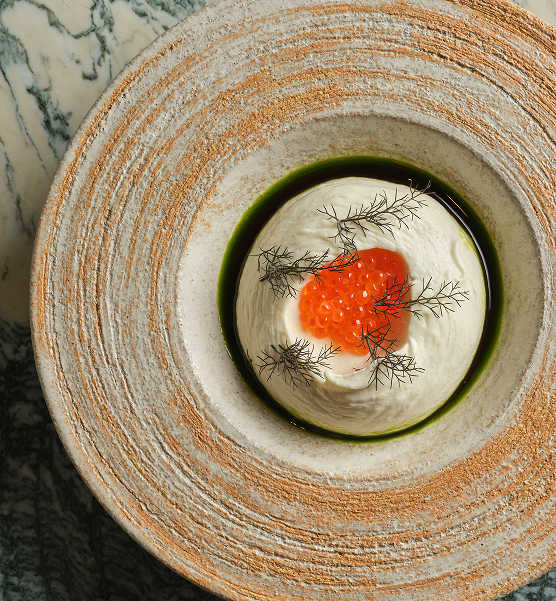
Begin with a selection of vibrant small plates that celebrate the freshness and generosity of Mediterranean cooking. Choose from dishes including creamy taramosalata with smoked cod roe and trout roe, spicy tirokafteri, smoky melitzanosalata with aubergine and pomegranate, delicate dolmadakia finished with avgolemono, or crisp beetroot with its leaves, goat’s cheese and crushed walnuts. Hortopita, filled with wild greens and feta wrapped in golden phyllo pastry, offers another taste of traditional Greek comfort.
For the main course, the menu continues to reflect both heritage and seasonality. The traditional lamb moussaka celebrates one of Greece’s most iconic dishes, while grilled octopus pairs beautifully with flamed green beans and fermented savoy cabbage. For a fresh, colourful centrepiece, opt for the Greek salad or order the poached free range eggs with English asparagus and wild garlic hollandaise – it’s a fine example of the restaurant’s commitment to seasonal British produce interpreted with a Greek perspective.
Dessert continues the journey with either syrup-soaked portokalopita served alongside kaimaki ice cream or warm loukoumades drizzled with thyme honey, walnuts and cinnamon.
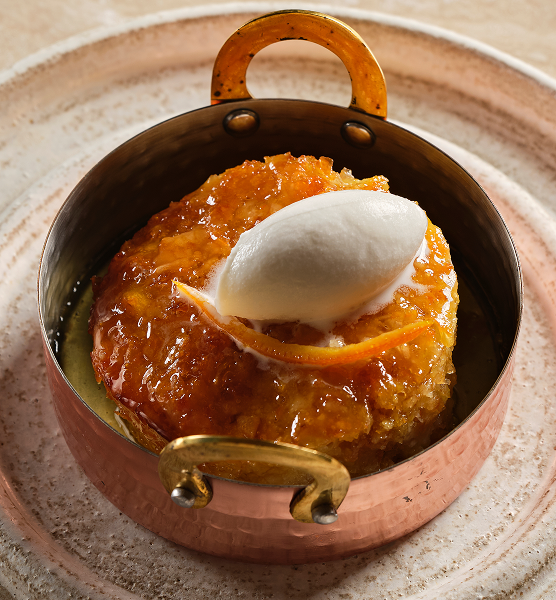
This carefully curated seasonal lunch menu demonstrates that exceptional ingredients and refined cooking need not be reserved for evening dining.
EXPLORE THE LUNCH SET MENU
One of the Best Lunch Destinations in South Kensington
Finding the best lunch South Kensington has to offer depends on more than the food alone. Myrtos sits in one of London’s most vibrant cultural neighbourhoods, making it perfectly placed for a relaxed lunch before or after visiting South Kensington’s museums and galleries. For anyone looking for lunch near museums in London, it provides an opportunity to extend a day of culture with a meal that transports guests to the Greek islands.
The atmosphere is equally suited to leisurely afternoons with friends, celebrations, solo dining or simply escaping the pace of the working day. Unlike many restaurants that encourage quick turnover, Myrtos embraces the slower rhythm that defines Greek hospitality. Lunch is never simply another booking – it is an experience designed to be enjoyed.
The Perfect Business Lunch Option
In a world where hybrid working is becoming the norm, people are now seeking restaurants that balance excellent food with relaxed surroundings for out-of-office meetings. For those looking for a business lunch in London, Myrtos offers exactly that balance. The fixed-price menu allows guests to enjoy Greek culinary expertise from our chefs in a format that feels accessible, efficient and unhurried.
Whether discussing new ideas, welcoming clients or reconnecting with colleagues, the restaurant offers an elegant yet welcoming setting where conversation flows naturally alongside beautifully prepared food.
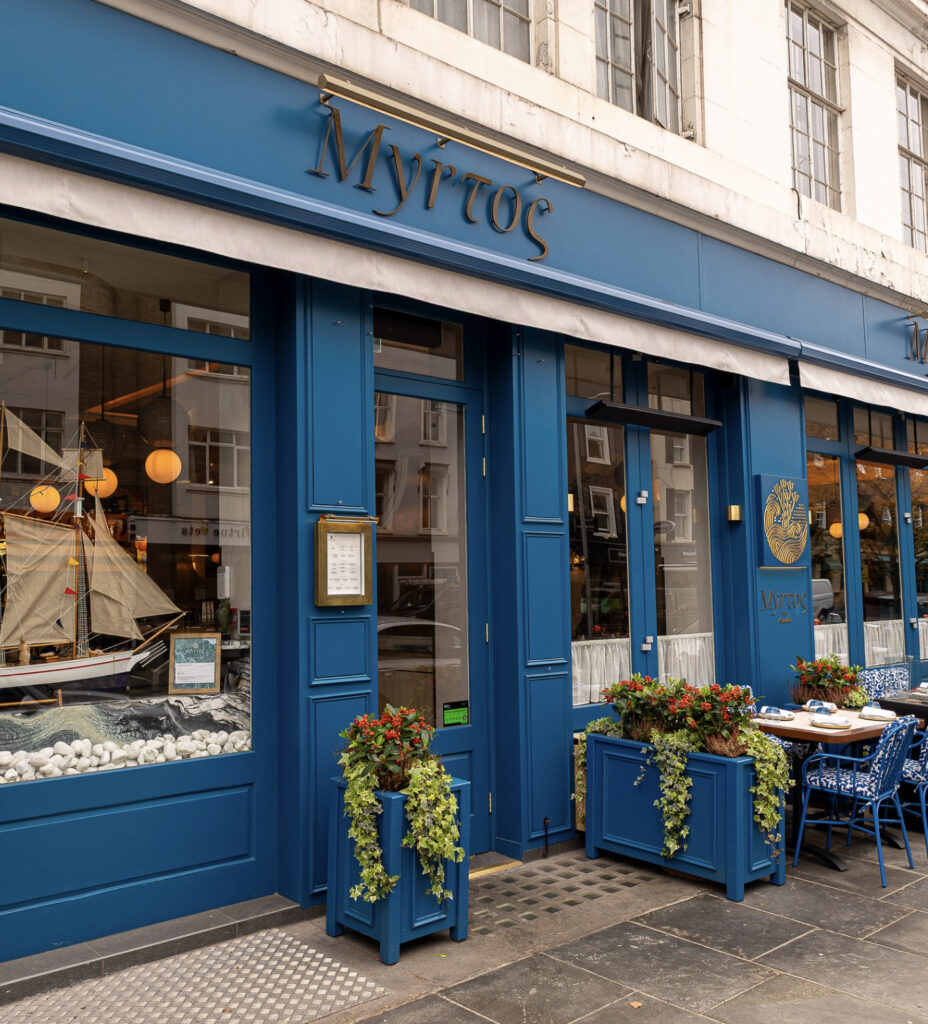
Affordable Luxury in the Heart of London
Luxury dining doesn’t always require an elaborate tasting menu. Our lunch offering demonstrates that exceptional hospitality, premium ingredients and refined cooking can also provide remarkable value.
For those looking for an affordable luxury lunch in London, Myrtos presents an experience that feels generous from the moment guests arrive. Every detail reflects the restaurant’s commitment to quality, from carefully sourced produce to thoughtful presentation and warm, attentive service. It is this balance that transforms a simple weekday lunch into something memorable.
A Chef-Led Lunch That Celebrates Greek Heritage
Every menu at Myrtos reflects our lifelong connection to Greece. Our cooking honours classic Greek recipes while introducing contemporary techniques and seasonal British ingredients.
Our chef-led lunch menu reflects that philosophy beautifully. Familiar dishes are elevated with precision and imagination while remaining unmistakably Greek at heart.
Each plate tells a story – of heritage, craftsmanship and respect for the ingredients themselves.
A Mediterranean Escape in the Middle of the Day
There is something quietly restorative about stepping away from London’s busy streets and settling around a table where lunch is encouraged to unfold naturally.
At Myrtos, lunch is an invitation to slow down. Whether you’re meeting friends, enjoying a leisurely lunch after exploring South Kensington’s museums, or taking time out with colleagues, our set lunch offers a warm welcome, seasonal Greek cooking and a chance to experience the spirit of philoxenia in the heart of London.
Available Monday to Friday from 12pm to 5pm | Two courses for £25 or three courses for £29
BOOK NOW
From Land & Sea: The Ingredients That Define a Mediterranean Summer
There are some ingredients that simply taste better in summer. Fresh fish and seafood, ripe tomatoes, fragrant herbs, courgettes, aubergines, peppers, sweet watermelon and fragrant melon all reach their seasonal best, shaping the flavours of the Mediterranean table. Together, they tell the story of a season where exceptional ingredients inspire simple, generous cooking.
At Myrtos, our cooking follows that same rhythm. Guided by the seasons and inspired by the Greek landscape, we let exceptional produce take the lead, bringing together the best of land and sea.
Led by the Seasons
One of the defining characteristics of Mediterranean summer food is its focus on exceptional ingredients. Rather than beginning with a recipe, Greek cooking often begins with what’s in season – fresh seafood, sun-ripened vegetables, fragrant herbs, sweet summer melons, bright citrus and olive oil.
Across Greece, generations of cooks have understood that great ingredients deserve thoughtful treatment. Every element has its place, whether it’s the sweetness of a perfectly ripe tomato or the freshness of just-caught seafood. It’s an approach that has shaped Greek cuisine for generations and continues to inspire the way we cook at Myrtos today.
A Season Guided by Nature
In Greece, the seasons have always shaped the way people gather around the table. Summer meals are lighter, longer and often shared outdoors, built around whatever has been harvested that day or brought in fresh from the sea.
It’s a tradition that has been part of everyday life for generations. Rather than expecting the same ingredients all year round, people naturally cook with what’s at its best, allowing each season to bring something different to the table.
That connection to the seasons continues to inspire the way we cook at Myrtos, where the menu evolves to celebrate the freshest ingredients available.
The Best of Land & Sea
Summer offers an abundance of ingredients that have become synonymous with Mediterranean cooking.
Fresh Seafood
Whether it’s beautifully fresh fish, octopus or shellfish, seafood plays an important role during the Greek summer. Cooked simply with olive oil, herbs and lemon, it reflects the confidence of ingredient-led cooking.
Summer Vegetables
Tomatoes, courgettes, aubergines and peppers are at their finest during the warmer months. These humble ingredients appear throughout Greek kitchens in salads, mezze and slow-cooked dishes, bringing colour, sweetness and freshness to every table.
Summer Fruits
Watermelon and melon are among the defining flavours of a Greek summer. Served simply, paired with cheese or enjoyed as a refreshing finish to a meal, they capture the sweetness and abundance of the season.
Herbs and Olive Oil
Fresh oregano, dill, parsley and mint bring brightness and depth to Greek cooking, creating the distinctive flavours found across the country’s regional cuisine.
At the heart of it all is extra virgin olive oil, an ingredient that doesn’t simply finish a dish – it helps define it.
Why Simplicity Matters
The finest ingredients rarely need much encouragement. A squeeze of lemon, a drizzle of olive oil, a handful of herbs. That’s often enough.
In Greek cooking, simplicity isn’t about doing less – it’s about knowing what each ingredient brings to the dish and allowing those flavours to work in harmony. Every element has a purpose, bringing balance, freshness or texture without overshadowing the ingredient at its heart.
That philosophy is reflected throughout the menu at Myrtos, whether it’s the clean flavours of our Kefalonian organic sea bass, finished with extra virgin olive oil and lemon, or the freshness of our taramosalata, lifted with dill oil and trout roe. Each dish is carefully composed to allow exceptional ingredients to remain the focus.
A Taste of Summer at Myrtos
Across our current menu, the flavours of the Mediterranean summer appear in different ways. Bluefin tuna is paired with Cretan rock samphire, tomatoes and capers, while prawns saganaki brings together sweet prawns, ripe tomatoes, feta and a gentle hint of chilli. Our stuffed chicken breast celebrates the season with courgette, sun-dried tomatoes and graviera cheese, while our rotisserie cauliflower is finished with parsley, pomegranate and dukkah.
Even our side dishes, from Greek wild greens with lemon to whole butter lettuce with anchovy and chives, reflect the bright, ingredient-led character of Mediterranean summer.
Whether you’re joining us for lunch in the sunshine or dinner with family and friends, we hope you’ll enjoy a taste of the Mediterranean summer, one shaped by the seasons and made for sharing.
BOOK YOUR TABLE
The Best Terrace for Alfresco Dining in London: A Taste of the Mediterranean at Myrtos
There’s something undeniably special about outdoor dining in London during the summer months. As the city slows into longer evenings and sun-filled afternoons, the Myrtos terrace fills with the hum of conversation and the ring of glasses as friends and family gather to embrace the season and enjoy the simple pleasure of gathering outdoors. Unsurprisingly, it’s one of our favourite times of year.
Outdoor Dining in London: A Mediterranean Escape in South Kensington
For those searching for an outdoor restaurant in London this summer, Myrtos offers a Mediterranean-inspired escape in the heart of South Kensington. Rooted in Greek hospitality and designed for connection, our terrace brings together seasonal cuisine, a thoughtfully curated drinks menu and a relaxed atmosphere that transports guests far beyond the city streets. You’d be forgiven for thinking you’d been transported to a Greek island.
Why Terrace Dining in London Comes Into Its Own During Summer
We love London in the summer. Parks become gathering places, streets feel more vibrant and dining naturally moves outdoors. In particular, terrace dining in London offers an opportunity to experience the city differently. The mix of fresh air, natural light and an unhurried atmosphere creates a sense of occasion, whether you’re meeting friends for lunch or enjoying date night.
Located in one of London’s most elegant neighbourhoods, Myrtos offers outdoor dining in South Kensington that feels both sophisticated and relaxed. Our terrace draws inspiration from the landscapes of Greece, reflecting the natural beauty and slower pace of life found across the Ionian islands and Mediterranean coastline. Here, guests can enjoy seasonal food and drink while embracing the slower rhythm that defines Greek hospitality.
As a restaurant terrace in London, the space is designed for every type of occasion, from long lunches and afternoon drinks to leisurely dinners with friends and family. Whether visiting in between exploring South Kensington or planning an evening celebration, guests are welcomed with the same spirit of philoxenia that shapes every aspect of the Myrtos experience.
Alfresco Dining in London: Seasonal Dishes for Summer
Our menu reflects the landscapes and produce of Greece, celebrating ingredients that feel naturally suited to outdoor dining. For guests seeking a lighter lunch on the terrace, seasonal small plates provide an ideal way to sample multiple flavours while embracing the relaxed spirit of alfresco dining in London. Begin with a selection of raw and seafood dishes, such as pink bream crudo dressed with citrus and extra virgin olive oil, or bluefin tuna paired with Cretan rock samphire, tomatoes and capers. Bright, elegant and full of freshness, they capture the essence of Mediterranean summer cooking.
For those seeking something heartier, dishes such as grilled octopus with flamed green beans and fermented savoy cabbage or poached cod with skordalia and pickled rock samphire showcase the restaurant’s approach to seafood: ingredient-led, refined and deeply connected to Greece’s coastline.
As the afternoon drifts into evening, larger dishes provide a centrepiece for the table. Our salt-baked Kefalonian organic sea bass arrives simply dressed with lemon and extra virgin olive oil, while the whole lobster Giouvetsi combines shellfish, basil and tomato in a dish that evokes long lunches by the sea. Looking for something sweet? We’ve shortlisted the five Greek desserts you need to try.
As day turns to evening, the terrace takes on a different character. The pace slows, conversations linger and the golden light of early evening creates an atmosphere that feels distinctly Mediterranean. It is often at this time of day that guests settle in for a second glass of wine, order another dish to share or simply enjoy being outdoors for a little longer. For many, this golden-hour transition is what makes summer dining in London so appealing, transforming an ordinary meal into something memorable.
Natural Greek Wines and Cocktails for Terrace Dining in London
Few things complement terrace dining quite like a chilled glass of wine as the sun begins to set. Our natural wine list takes guests on a journey through Greece’s vineyards, from the volcanic soils of Santorini to the Ionian island of Kefalonia. Carefully selected producers champion authenticity, sustainability and a strong sense of place, making every bottle an expression of the landscape from which it comes.
Not every terrace visit needs to revolve around a full meal. One of the joys of summer dining is the opportunity to pause for a pre-dinner drink or a leisurely afternoon aperitif. Across the Mediterranean, the hours before dinner are often reserved for catching up with friends over a cocktail or glass of wine, accompanied by a few small bites. It is a ritual that encourages people to slow down and savour the moment rather than rush from one commitment to the next.
Our cocktail menu, created with renowned Athenian bar Line, offers just this. The Limoncello Spritz brings together elderflower, chamomile and citrus notes, while the Orange Blossom Collins combines mastiha spirit, white peach and jasmine soda for a refreshing taste of summer. For those looking for something lower in alcohol, the Bergamot & Tonic offers a bright, botanical alternative that feels perfectly suited to a warm London evening. Read more about our Greek cocktail journey here.
Outdoor Dining in South Kensington: Make a Day of It
One of the pleasures of outdoor dining in South Kensington is that it naturally lends itself to a day spent exploring one of London’s most beautiful neighbourhoods.
Spend the afternoon browsing the boutiques that line the surrounding streets. Pick up a read or two at South Kensington Books on Thurloe Street and discover unique homeware at Soroka. Take a stroll through nearby Kensington Gardens or visit one of the area’s world-famous cultural institutions, from the V&A to the Natural History Museum. During the summer months, South Kensington feels particularly vibrant, with visitors and locals alike making the most of the longer days and warmer evenings.
A relaxed lunch on the terrace can easily become an afternoon of discovery, while dinner reservations provide the perfect conclusion to a day spent exploring the neighbourhood. Alternatively, book an early dinner reservation before going on to enjoy a concert at the Royal Albert Hall. It is this combination of culture, atmosphere and exceptional dining that makes South Kensington one of London’s most sought-after destinations during the summer season.
Whether you’re stopping by for an afternoon drink, a leisurely lunch or dinner at sunset, we invite you to embrace the slower pace and simple pleasures of Mediterranean living on the Myrtos terrace.
RESERVE YOUR TABLE
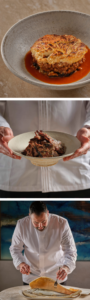
Where to Celebrate Father’s Day in London: Greek Hospitality, Family and Gathering Around the Table at Myrtos
Father’s Day is more than just a date in the calendar. Here at Myrtos, we think it’s the perfect opportunity to slow down, spend quality time together and make memories with the people who matter most.
Whether it’s a leisurely afternoon spent exploring London or an evening gathered around a beautifully set table, the most memorable celebrations are often the simplest: sharing stories, enjoying good food and being present with the people we love.
If you’re considering where to celebrate Father’s Day in London, plan a day that combines culture, connection and extra-special dining. Need inspiration? We’ve put together a tried-and-tested guide, from feasting as a family to the must-see galleries, museums and parks to stroll to after a hearty meal.
Make A Day Of It: The Myrtos Guide To Father’s Day In South Kensington
In Greece, meals are as much about connection as they are about eating delicious food. Families and friends gather for hours, sharing dishes, conversation and moments that become lasting memories. This spirit of togetherness is rooted in philoxenia, the Greek tradition of hospitality that welcomes every guest with warmth and generosity. This philosophy shapes every aspect of the Myrtos dining experience, from the atmosphere of the restaurant to the dishes that arrive at the table.
For families looking for Father’s Day dining in London, our shared dining concept creates space for conversation and connection. Rather than rushing through a meal, we encourage our guests to slow down, savour each course and enjoy the occasion together.
There are many ingredients that go into making a memorable Father’s Day celebration. At the heart of it all is time spent together, enjoying good food, conversation and the simple pleasure of sharing an experience around the table.
At Myrtos, you can expect a welcoming atmosphere that feels special without being formal, so you can relax and enjoy your time here. That, and exceptional food that’s designed to be shared. We also recommend bookending your Myrtos meal with thoughtful activities to really make a day of it. Myrtos is located in South Kensington, a hubbub of activity and the perfect setting for a full day of exploration before gathering for a Father’s Day lunch in London or an evening meal.
Morning: Discover London’s Cultural Landmarks
Begin the day with a visit to one of South Kensington’s renowned museums. Take Dad to the Victoria and Albert Museum, where he can enjoy the ‘Rising Voices’ exhibition, featuring contemporary art from Asia, Australia and the Pacific. Alternatively, the Natural History Museum offers something for all generations and the current ‘Jurassic Oceans: Monsters of the Deep’ exhibition is a case in point. Visitors can meet the legends of Earth’s prehistoric oceans, from the pliosaur to the ichthyosaur. For more ideas, check out our guide on what to do in South Kensington.
Lunch at Myrtos
Following a morning of exploration, settle into a relaxed Father’s Day lunch in London at Myrtos. Designed to encourage sharing and discovery, our menu celebrates Greek tradition while showcasing the creativity of our chefs.
Seasonal ingredients, carefully sourced produce and elegant presentation combine to create a dining experience that feels both authentic and contemporary. We absolutely recommend mixing it up and sharing whatever you order. That’s the fun of a Father’s Day meal with us, after all.
Start with a selection of dips and sharing plates, from Taramosalata (a classic) to beetroot, crushed walnuts and goats cheese. Then enjoy traditional lamb moussaka and our hearty Greek salad. Finally, finish on a sweet note with Portokalopita, a mouthwatering Greek orange cake served with kaimaki ice cream.
If you need more inspiration, we’ve also rounded up the five dishes you need to try at Myrtos London.
Afternoon: Stroll Through Nearby Green Spaces
After enjoying culture and cuisine, take a walk through one of London’s beautiful parks. One of our favourites has to be Kensington Gardens, which features the stunning Italian Gardens, Kensington Palace and the Diana, Princess of Wales Memorial Playground. A leisurely walk creates even more moments for conversation and connection.
Evening: Continue the Celebration
Families searching for restaurants for Father’s Day in London are often looking for more than a great meal. They are looking for an experience that brings everyone together and creates lasting memories.
A Father’s Day dinner in London should feel relaxed yet memorable, allowing families to enjoy exceptional food without formality. Myrtos provides exactly that balance, combining refined cooking with genuine hospitality. As one of the most welcoming family restaurants in London, Myrtos offers a relaxed setting where guests of all ages can gather around the table and celebrate together.
Our à la carte menu is inspired by Greece and its beautiful isles, mainland, mountains and tradition, and is designed to be shared amongst family and friends. Sharing plates are passed around the table, conversations flow more easily and guests experience a meal collectively rather than individually. This style of family dining in London encourages conversation, discovery and connection, making Father’s Day feel all the more memorable.
Order a sourdough loaf, which can be torn apart and dipped into Tirokafteri (spicy feta and Greek yoghurt) as you chat about the day’s highlights. Next, order a host of small plates to satisfy everyone in your party, from grandparents to young children. Then, collectively tuck into our sharing mains, from the whole lobster Giouvetsi to the Kefalonian organic sea bass, designed to be enjoyed with natural Greek wine – and great conversation.
For those with a sweet tooth, we have a dessert menu to delight. Our Loukoumades (Greek donuts) are a popular choice, as is our melt-in-the-mouth milk chocolate mousse. Cheese aficionados will appreciate our artisanal Greek cheese, all served with olive stick bread, sour cherry and dried fig.
Whether you’re planning a Father’s Day lunch in London or a Father’s Day dinner in London, the focus remains the same: exceptional ingredients, authentic flavours and a dining experience designed to bring people together. After all, family celebrations are rarely about a single dish or moment. They are about the experience created when everyone comes together.
Whether you’re searching for Father’s Day restaurants in London, planning a Father’s Day lunch in London or looking for a memorable Father’s Day dinner in London, book your table at Myrtos and experience Father’s Day the Greek way.
RESERVE YOUR TABLE
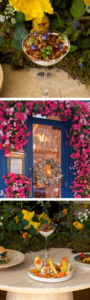
Myrtos in Bloom: An Ode to the Season in Collaboration With FlowerBX
Myrtos London X FLOWERBX
Chelsea in Bloom is just around the corner, and with it, a new expression of the season at Myrtos. In partnership with FLOWERBX, we introduce a menu of floral-led dishes and cocktails, designed to complement our classic à la carte offering.
What is Chelsea in Bloom?
Running alongside the world-famous RHS Chelsea Flower Show, Chelsea in Bloom brings the spirit of high-end floral artistry out of the showground and onto the streets of London, turning everyday spaces into extraordinary visual experiences. From shopfronts and hotels to cafés and boutiques, the entire neighbourhood becomes a curated outdoor gallery of imaginative floral installations.
What makes Chelsea in Bloom truly special is that it’s completely free to explore, inviting everyone to experience world-class floral design up close, while enjoying the energy of one of London’s most refined neighborhoods. Set against an annual theme, this year Out of this World, will see Chelsea completely transformed into an intergalactic wonderland, with floral displays centred around the allure of space travel, astrology and spiritual symbolism.
Chelsea in Bloom: How to Explore
Discover Chelsea in Bloom through a more considered, immersive journey. Join a guided walk led by the festival’s ambassador, where each floral installation reveals its story, an invitation to connect more deeply with the artistry and inspiration behind every detail.
For a more effortless experience, take your seat in a Chelsea in Bloom rickshaw and drift through the neighbourhood at a gentler pace, where the beauty of each display unfolds naturally around you.
Or, experience your own route across the intergalactic floral extravaganza. Begin at Sloane Square, where Chelsea in Bloom reveals a celestial display, a constellation of florals that quietly evoke the harmony of nature and the cosmos.
From here, walk along Sloane Street, where craftsmanship and imagination meet, mythical forms take shape in petals and leaves, from a soaring Pegasus to a striking dragon, each installation is a celebration of artistry and detail.
Continue towards Pavilion Road, where the mood softens into something more playful, a fleeting, almost dreamlike pause beneath a hovering floral installation.
Finally, arrive at King’s Road, where the journey culminates in a grand tribute to the natural world: an abundant floral globe, rich in texture and life.
The Myrtos Menu, Reimagined by FLOWERBX
At Myrtos London, the season continues at the table. In collaboration with FLOWERBX, we bring guests a selection of dishes and cocktails, reflecting the same sense of transience and natural beauty seen throughout Chelsea in Bloom – ingredient-led, expressive and quietly detailed.
Step through our FLOWERBX-designed pink bougainvillea and cherry blossom archway before delving into the Bluefin Tuna Ceviche, a starter layered with rock samphire and nasturtium petals. For the table, experience our Kefalonian Organic Seabass, a centrepiece made to be shared in the spirit of philoxenia. Finish with Greek Frozen Yoghurt, macerated strawberries, Metaxa, mahlepi granola and borage flowers – a fragrant, quietly indulgent close.
Alongside the menu, a collaboration with Line Athens – ranked among the World’s Best Bars – introduces four floral cocktails shaped by seasonality. From the Flower Gimlet with gin, strawberry, elderflower and green pepper, to the non-alcoholic Garden Punch with green apple, cucumber and jasmine, each is light, balanced and considered.
Whichever way you decide to explore Chelsea in Bloom this Spring, the Myrtos London X FLOWERBX menu ends the day just as it started. Creative and alluring, a feast to the senses.
RESERVE YOUR TABLE
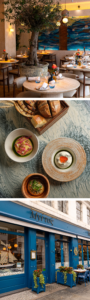
What to Do in South Kensington: A Myrtos Guide to Culture, Museums and Dining
Within just a few streets of South Kensington, you can move effortlessly between world-renowned museums, cultural corners and glimpses of global heritage, where even subtle threads of Greek artistry reveal themselves. Whether visiting for the first time or rediscovering it at a slower pace, this is how to spend a day in South Kensington, finishing exactly where you should: at Myrtos London.
BEGIN AT THE V&A MUSEUM: ART AND DESIGN ON CROMWELL ROAD
If London had a personality, the V&A museum would be its most effortlessly stylish companion: cultured and quietly confident. Step inside and journey through the past, present and future of creativity. Explore thoughtfully curated trails and extraordinary collections spanning more than 5,000 years of art and design. From the iconic Cast Courts, with replicas such as Michelangelo’s David, to the intricate stories of European jewellery, every corner invites discovery, encouraging you to slow down and look a little closer.
DISCOVER THE SCIENCE MUSEUM ON EXHIBITION ROAD
For those drawn to discovery and innovation, the Science Museum lies just moments away. Home to award-winning exhibitions, iconic objects and stories of remarkable scientific achievement, it offers an inspiring glimpse into the ideas that have shaped our world. Free to enter, it is a natural addition to a day spent exploring South Kensington, offering a different yet equally engaging perspective on curiosity.
A MOMENT BETWEEN MUSEUMS: OLD BROMPTON ROAD AND THE THIN HOUSE
For a mid-museum pause, wander along Old Brompton Road and take in its rhythm: Georgian terraces, ornate Victorian red brick and elegant Edwardian mansion blocks lining the way. Just beyond, a short detour reveals one of London’s most curious architectural moments – the famously narrow “Thin House”, a playful reminder of the city’s layered character. It’s an understated stretch of the city, where every façade carries a sense of history and quiet intrigue.
THE NATURAL HISTORY MUSEUM: NATURE AND WONDER IN SOUTH KENSINGTON
Continuing your exploration, the Natural History Museum stands as one of England’s great archives of life on Earth. With vast zoology collections, striking wildlife photography and immersive outdoor gardens, it invites you to journey through nature’s past and present – an experience that is both educational and quietly awe-inspiring.
WHERE TO EAT IN SOUTH KENSINGTON: AN EVENING AT MYRTOS
As your exploration of South Kensington’s museums draws to a close, the experience continues at our South Kensington restaurant, Myrtos London, where heritage is expressed through flavour and craft.
Here, the experience shifts from observation to immersion. Greek dishes are thoughtfully reimagined with a refined, contemporary touch, each one rooted in tradition while elevated through precision. The menu offers a deeper connection to Greek culture through taste.
Shaped by the landscapes of the Ionian islands, every dish reflects a connection to land and sea. From Bluefin Tuna paired with Cretan rock samphire, to traditional Lamb Moussaka and Whole Lobster Giouvetsi, each plate brings together the flavours of Greece with balance and intention.
Designed to be shared, the menu encourages a more connected way of dining – one that lingers beyond the plate. Rooted in philoxenia, the Greek art of hospitality, every guest is welcomed with warmth and generosity. It is a natural final chapter to a day in South Kensington, where exploration gives way to connection, and discovery settles into something more meaningful.
RESERVE YOUR TABLE
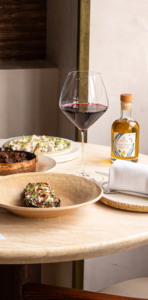
Slow Down, Savour, Share: An Evening with Bosinakis & Acheon Wineries
Consider this your invitation to slow down, savour and share. On Wednesday, 29th April, Myrtos London welcomes you for an intimate evening where Greek wine and cuisine come together in celebration of land, season and craft. From 6–10pm, we are joined by two esteemed wineries – Bosinakis and Acheon – whose wines will be thoughtfully paired with dishes from our à la carte menu.
Guided by the people behind the wines, this is an opportunity to experience Greece through its most expressive elements: its vineyards and spirit of togetherness.
BOSINAKIS WINERY: EXPLORING THE POWER OF MOSCHOFILERO
Bosinakis Winery began operating in 1992, but it was in 2009 that siblings Katerina and Sotiris Bosinakis began releasing wines under their own label, with a clear focus on exploring the full potential of Moschofilero. Based in the village of Steno, in the Mantinia plateau, the estate works vineyards planted at around 700 metres above sea level.
At this altitude, clay-rich soils and a cool climate suit Moschofilero particularly well, preserving aromatic precision and freshness while giving structure to the naturally light-bodied variety. The Bosinakis family have made a name for themselves by concentrating their knowledge and efforts solely on Moschofilero and specialising in small lots of outstanding single vineyard wines – from their benchmark PDO Mantineia, to a Pét-nat, and a wonderful, very light red wine from the pink-skinned Moschofilero.
ACHEON WINERY: AN ODE TO TRADITION AND TERROIR
Family remains at the heart of Acheon Winery, too. Run by two sisters – Sosanna and Katerina – Acheon’s focus is on the vinification of indigenous grape varieties, including Roditis, Sideritis, and Mavrodaphne. The vineyards are cultivated from the seaside at Aigio to the mountainous region of Aigialeia, where northerly exposures, high elevations and cool breezes from the Gulf of Corinth moderate summer heat and support extended ripening.
Following the traditional winemaking practices passed down through generations, which we now call minimal intervention, the sisters aim to produce quality wines from indigenous Greek varieties that naturally express the terroir and history of the region.
Join us for an evening where wine, food and conversation unfold at their own pace.
RESERVE YOUR SPACE

Easter in Greece: From Sacred Rituals to the Sunday Feast
At Myrtos London, Easter speaks to something close to our heart: the generosity of the Greek table and the pleasure of gathering with those around us. In the spirit of togetherness, we invite guests to discover an elevated taste of Greece in the heart of London, where heritage, flavour and hospitality combine with warmth.
EASTER IN GREECE: AN INVITATION TO SLOW DOWN AND SHARE
While Easter in the UK will be celebrated on Sunday 5 April, in Greece, Pascha will fall on Sunday 12 April this year, keeping with the Orthodox Church calendar. Though marked on different dates, Easter remains, in both places, a time of reflection and the joy of coming together with loved ones.
In Greece, Easter is one of the most meaningful moments of the year. It is deeply spiritual and shaped by generations of family tradition. From the quiet restraint of Lent to the warmth and abundance of the Easter feast, it is a celebration that brings faith, memory and hospitality together.
The journey begins with the 40 days of Lent, a period of fasting and reflection observed in preparation for Holy Week. During this time, many Greeks abstain from meat and other rich foods, embracing simplicity before the celebrations ahead. On Palm Sunday, worshippers are often given small woven palm crosses, and although Lent continues, the Church traditionally permits fish.
Most families honour the day with crispy salt cod, a tradition rooted in history and preservation, because fresh fish wasn’t always accessible, but the ritual of gathering around the table always was. Paired with skordalia, the delicious potato dip rich in garlic and olive oil, it’s a celebration of simplicity, resilience and the flavours that define Greek fasting cuisine.
The days that follow are marked by devotion and preparation. Holy Monday, Tuesday and Wednesday are observed with prayer and contemplation, while Holy Thursday commemorates the Last Supper. It is also the day when many homes begin preparing the flavours most closely associated with Greek Easter: Koulourakia, Lamprokouloura and Tsoureki – a selection of biscuits and breads, scented with orange. Eggs are dyed a deep red, symbolising the blood of Christ and becoming one of the most recognisable symbols of the season.
Holy Friday is the most solemn day of all. It is a day of mourning, remembrance and the strictest fasting, with many abstaining from animal products, olive oil and alcohol altogether.
Then, at last, comes the joy of Easter. The fast is traditionally broken with Magiritsa, a deeply comforting soup served in the early hours. On Easter Sunday, families and friends gather once again, usually around a table filled with dishes prepared for sharing. Lamb is traditionally roasted to mark the day, and red eggs are cracked in a playful ritual that represents the Anastasis Resurrection, with each tap echoing the breaking of the tomb, and a wish of good luck for the ‘winner’ who cracks the most eggs.
WHERE TO GO FOR EASTER SUNDAY LUNCH IN LONDON
At its heart, Greek Easter is a celebration of connection – of slowing down, sharing generously and welcoming others with open arms. Gather with those you cherish this Easter weekend and experience Greece through a contemporary lens at our South Kensington restaurant.
Whether sharing our Grilled Lamb Chops with coconut tzatziki or our salt-baked Kefalonian Organic Sea Bass, every plate is designed to be savoured together, in true Myrtos style. And for those celebrating Pascha on the 12th, our restaurant remains open. In the spirit of philoxenia, you may even find a familiar ritual waiting for you – red eggs, waiting to be cracked.
RESERVE YOUR TABLE
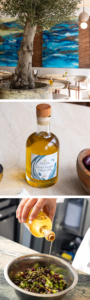
What Makes Koroneiki Olives So Special? A Myrtos Guide to Extra Virgin Olive Oil
At Myrtos London, olive oil is far more than an ingredient – it is the very soul of Greek cuisine. We serve the Loukakos Estate Extra Virgin Olive Oil, a single-varietal oil crafted from Koroneiki olives grown in the sun-drenched hills of Laconia in southern Greece. Deeply expressive and beautifully balanced, this exceptional oil reflects generations of care, tradition and respect for the land.
Golden-green in colour with a rich, buttery texture, our Koroneiki olive oil reveals fresh aromas of fruit, citrus, and wild grasses. Its flavour is vibrant and layered, with the classic gentle bitterness and elegant peppery finish that define truly great extra virgin olive oil.
Exceptionally high in polyphenols – certified at 870 mg/kg – the oil also offers remarkable antioxidant properties. Awarded for both its purity and complexity, Loukakos Estate olive oil embodies the same values we hold at our South Kensington restaurant: integrity and a deep connection to Greek heritage.
FROM ANCIENT TO MODERN GREECE: OLIVE OIL’S HISTORY
The history of olive oil stretches back over 6,000 years, rooted deeply in the landscapes and culture of the Mediterranean. Ancient civilisations in Greece and Crete were among the first to cultivate olive trees and produce oil, making it one of the earliest and most treasured ingredients in human history.
In ancient Greece, olive oil was used not only in cooking but also in medicine, beauty rituals, and religious ceremonies. Homer famously described it as “liquid gold,” while Hippocrates praised its healing properties.
Over time, olive oil became the foundation of Greek cuisine and the wider Mediterranean diet. Today, Greece continues this tradition, producing some of the world’s finest extra virgin olive oil. At Myrtos London, this centuries-old tradition lives on in every dish, with a simple drizzle of extra virgin olive oil connecting the flavours of Greece to our table in South Kensington.
THE POWER OF POLYPHENOLS: EXTRA VIRGIN OLIVE OIL’S HEALTH BENEFITS
Extra virgin olive oil with high polyphenols, such as our own, is celebrated not only for its flavour but also for its remarkable health benefits. Polyphenols – natural plant compounds such as oleocanthal and hydroxytyrosol – act as powerful antioxidants that help protect the body from oxidative stress and inflammation. That’s why a spoonful of high-phenolic extra virgin olive oil each morning is a simple ritual, but one of nature’s great health powerhouses.
Diets rich in polyphenols have long been associated with improved heart health, better blood vessel function and reduced risk of chronic disease. They may also support brain health, help regulate blood sugar and contribute to a balanced gut microbiome. It is one of the reasons the Mediterranean diet, centred around olive oil, fresh produce and shared meals, is consistently linked with longevity and wellbeing.
HOW TO BEST ENJOY OLIVE OIL AT MYRTOS LONDON
At Myrtos, a bottle of our olive oil sits proudly on every table. Drizzle it generously over a Greek salad, mix it through our dips, or simply enjoy it with warm bread. It is the simplest and most authentic way to experience the true flavours of Greece.
At home, extra virgin olive oil is wonderfully versatile – perfect for roasting, baking, frying, or finishing dishes. Contrary to common belief, quality olive oil remains stable even at higher cooking temperatures. Just remember to look for “extra virgin” olive oil when shopping and embrace the gentle bitterness and peppery finish – these are signs of freshness and high polyphenol content.
For us, olive oil is indispensable. Through every dish at Myrtos, we celebrate the unmistakable flavour it brings – a taste that carries the spirit of Greece to the heart of London.
RESERVE YOUR TABLE
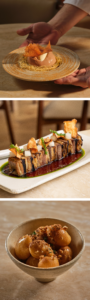
A Reason to Gather: Mother’s Day at Myrtos London
From long lunches on sun-drenched terraces to days spent by the sea, our mothers have always been at the centre of everything we do. Not only within our own lives, but in nature too – connecting land and sea, memory and home.
Each year, Mother’s Day offers a moment to honour the maternal figures who shape us. Though celebrated on different dates across the world, it remains a time to show gratitude and respect to those closest to us. At Myrtos London, we invite you to gather with your loved ones this Mother’s Day, sharing dishes inspired by the flavours, generosity and feeling of Greece.
Whether you bring your mother, grandmother or friends, our South Kensington restaurant awaits, welcoming you in the spirit of philoxenia – the Greek art of hospitality that turns guests into family.
THE HISTORY OF MOTHER’S DAY: AN ODE TO ANCIENT GREECE AND MOTHERING SUNDAY
While Mother’s Day in Britain falls in March, in Greece it is celebrated on the second Sunday of May. Today it may feel more modern and secular, yet its roots trace back to ancient festivals honouring Rhea, the mother of the gods.
In ancient Greek tradition, Rhea symbolised fertility, nature and the origin of life itself. Celebrated each spring, she represented the enduring power of motherhood – a sentiment that still resonates today. Though the festivals no longer take place, the spirit of honouring mothers remains deeply woven into Greek culture.
In the UK, Mother’s Day – or Mothering Sunday – dates back to the 16th century, when families returned to their ‘mother church’, the parish where they were christened. Over time, the tradition evolved into a rare opportunity for families to reunite, particularly for those working away from home.
Despite falling during Lent, the day was often marked with sweet treats – Simnel cake, ‘mothering buns’, even fig pie – small gestures of appreciation that spoke volumes.
PLANT, SEA, LAND: A SUNDAY MENU WORTH SHARING
While we may not have Simnel cakes to hand, our menu offers its own reason to gather. Served with Coconut Tzatziki or Jus Gras, our Grilled Lamb Chops and Grilled Beef Sirloin are inspired by the Ionian landscapes that continue to shape our chefs’ cooking.
To finish, something sweet to share. From Milk Chocolate Mousse – our refined take on a beloved classic – to Loukoumades, golden Greek doughnuts drizzled with thyme honey, crushed walnuts and cinnamon, each dessert brings a touch of nostalgia to the table.
And no celebration is complete without a toast. Perhaps the savoury depth of our Sun-Dried Tomato Bloody Mary, created in collaboration with Line, Athens, or a glass of our Myrtos House Rosé from Evia, crafted with respect for the vines and their terroir.
Join us this Mother’s Day at Myrtos London and raise a glass to the women who anchor us – in life, in memory and around the table.
RESERVE YOUR TABLE

Myrtos x Line Athens: A Greek Cocktail Journey
At Myrtos London, every dish and drink carries a piece of Greece: a moment of nostalgia from the mainland and a taste of the sun-drenched islands. Our bar is an extension of this philosophy. In collaboration with Line Athens – one of the world’s most celebrated cocktail bars – we bring a new chapter of Greek creativity to South Kensington.
Founded by Vasilis Kyritsis and Nikos Bakoulis – renowned for their work at The Clumsies – alongside Dimitris Dafopoulos, co-founder of Three Cents Artisanal Beverages, Line Athens has redefined the contemporary Greek cocktail scene. By transforming a former art gallery in the Kato Petralona district, they have created a space where fermentation, craft and imagination converge.
At Line Athens, nothing is overlooked, and everything is honoured. They produce their own fruit wines (‘Why Ins’), beers and sourdough breads on-site, ensuring that every part of the ingredients is utilised. But their innovative approach also extends to their cocktails, a standout example being their pomegranate ‘Why-in’ – a fruit wine that undergoes a unique fermentation process, resulting in complex flavours that elevate classic cocktails.
It’s this dedication to sustainability and creativity that has earned Line Athens international acclaim, including a ranking of No. 8 in The World’s 50 Best Bars 2025. Together, we have created an exclusive collection of cocktails inspired by Greek ingredients, tradition and craftsmanship. Each one reflects the same creativity and reverence that define our kitchen – a celebration of land, sea and heritage in liquid form.
Whether you’re sipping on the rich, savoury notes of our Sun-Dried Tomato Bloody Mary or the floral elegance of our Orange Blossom Collins, you’ll discover the essence of Greek tradition – and flavour – in every glass. Here’s a glimpse at our South Kensington restaurant’s cocktail collection:
– Mediterranean Martini: A sophisticated take on a classic, blending Mediterranean Gin with dry vermouth, Kalamata olives, lemon thyme, and a hint of miso vinegar for unexpected umami depth. It’s salty, herbaceous, and undeniably Greek.
– Myrtos Negroni: Our signature twist on the Negroni stays true to its bittersweet roots while incorporating toasted fennel seed and goat butter for a rich, silky finish. This is Greek indulgence in a glass.
– Limoncello Spritz: A celebration of citrus, our house-made Myrtos Limoncello meets elderflower, chamomile, fresh coriander, and the effervescence of Karanika Brut. Light, floral, and perfect for summer days.
– Rosemary Paloma: Tequila Blanco and smoky Espadin Mezcal dance with Greek honey, rosemary, citrus, and pink grapefruit soda for a refreshing, herbaceous take on the beloved Paloma.
– Sun-Dried Tomato Bloody Mary: A bold reinvention of the classic, featuring vodka infused with sun-dried tomato, red beetroot molasses, and balsamic vinegar. Savoury, tangy, and deeply satisfying.
– Midnight Old Fashioned: Cognac meets Amaro, Cocoa and Roasted Dates in this after-dark take on a classic.
– Orange Blossom Collins: Mastiha spirit, orange blossom honey, lavender, citrus, and white peach & jasmine soda create a floral, fragrant cocktail that captures a Greek garden in full bloom.
– Apple Whiskey Sour: Bourbon blended with red apple, thyme honey, limoncello citrus and oak for a smoky, autumnal expression.
– Aegean Sangria: Our house white wine blends with Mastiha liqueur, Metaxa 12, citrus, and bubbles for a Greek twist on a Spanish favourite. Refreshing, aromatic, and dangerously drinkable.
– Spiced Pomegranate Mule (Non-Alcoholic): A vibrant mix of non-alc gin, pomegranate, mandarin, citrus, and fiery ginger beer. A non-alcoholic option that doesn’t compromise on bold flavour.
– America-NO (Non-Alcoholic): Non-alc amaro, bitter red berries, and cherry soda combine for a refreshingly complex, booze-free take on the classic Americano.
– Low ABV: Bergamot & Tonic: White Bitter, Bergamot, Olive Leaf, Tonic Water. Clean, bright and effortlessly elegant.
RESERVE YOUR TABLE NOW

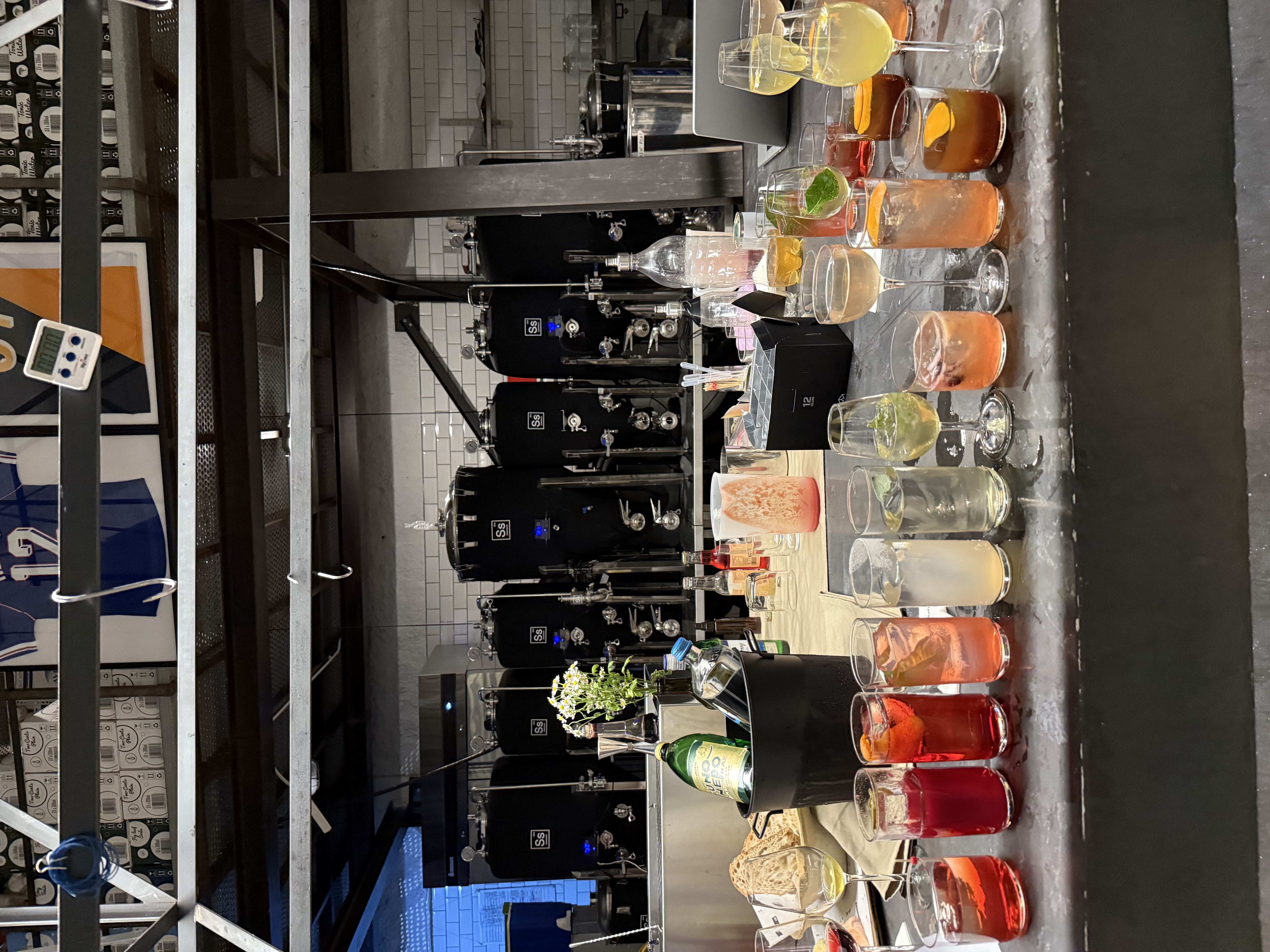
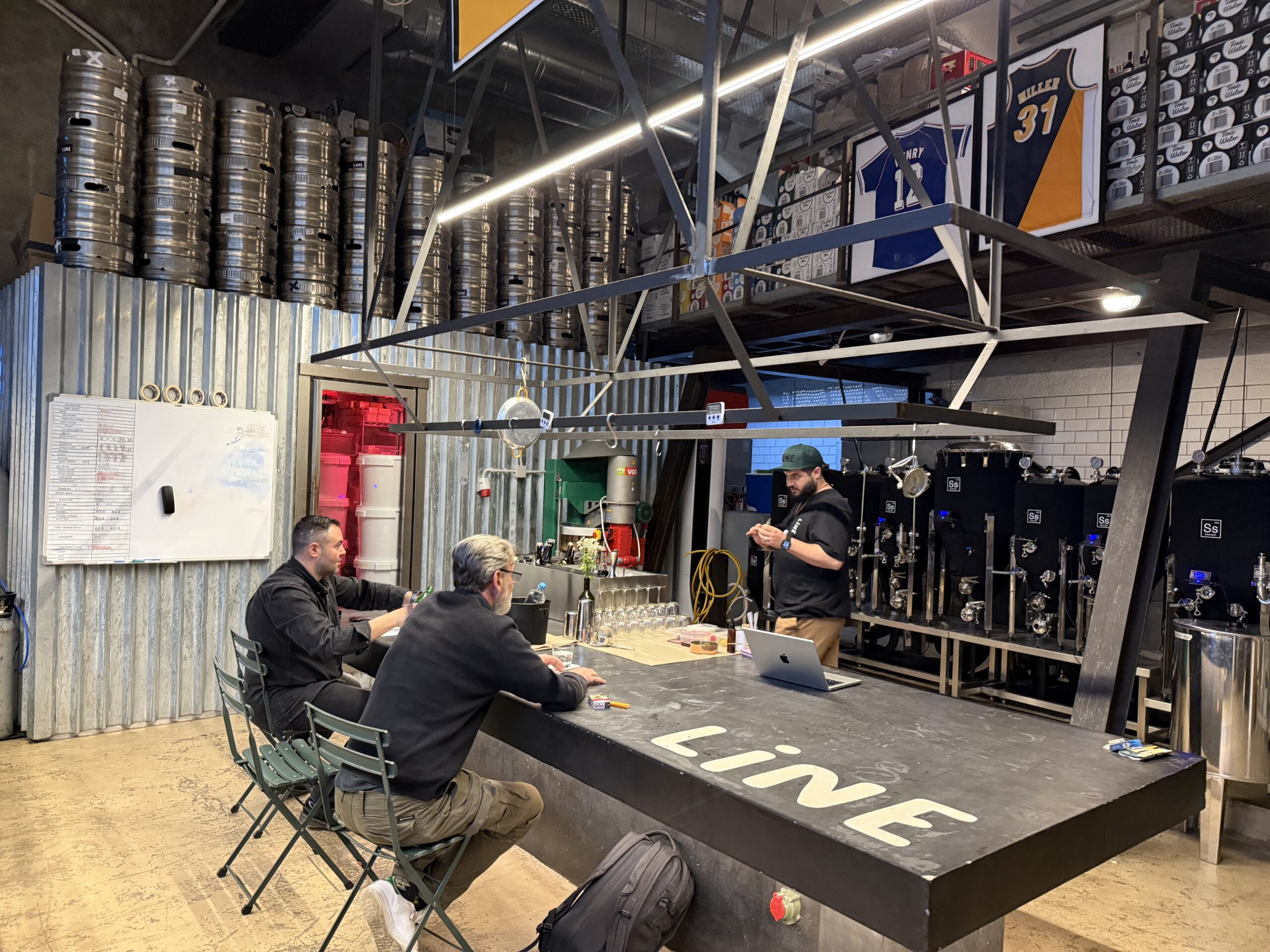
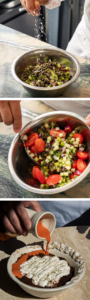
From Greece to London: Myrtos London’s Greek Salad Recipe
From sunlit lunches on the terrace to long evenings gathered around the family table, a Greek salad – horiatiki – has long been at the heart of cherished moments in Greek culture. While the version we know and love today is defined by tomatoes, cucumbers, onions, olives and feta, earlier interpretations were shaped by what was close to hand and finished with local cheeses.
The word horiatiki translates to “village-style,” a nod to the salad’s rural roots. Traditionally, it was a practical and nourishing dish for those spending long days working in the fields, made from locally-sourced ingredients and offering welcome refreshment beneath the hot sun.
Over time, horiatiki travelled far beyond the villages, becoming a symbol of Greek cuisine around the world. At Myrtos London, our interpretation remains rooted in tradition, gently reimagined through a modern lens. Built layer by layer and served with intention, ours features carob rusks, a silky feta mousse and a hint of wild oregano. A familiar dish, thoughtfully refined – and one we’ve shared so you can recreate it at home, wherever your table may be.
Ingredients
– Cherry tomatoes, halved 120g
– Red onions, brunoise 20g
– Green pepper, brunoise 20g
– Cucumber, brunoise 40g
– Kalamata Olives sliced 20g
– Carob rusk crumbs 40g
– Extra virgin olive oil 40g
– Wild Greek oregano 2g
– Flaked salt 1.5g
– Cabernet Sauvignon vinegar 10ml
– Feta mousse 80g
– Tomato gazpacho 80ml
– Liliput capers 20g
Preparation
Feta Mousse:
– Feta 800 g
– Full-fat milk 300 g
– Ground black pepper 1 g
Add feta, milk and black pepper to a Thermomix. Blend until it comes together, but still grainy. Place in a piping bag
Carob Rusk Crumb:
– Carob rusks 400 g
– Olives 100 g
Blend everything in a Thermomix, then spread and place on parchment and cook at 60 °C for 40 mins. Keep in an airtight container to stay dry.
Tomato Gazpacho:
– Cherry tomatoes 3000 g
– Cucumber peeled 900 g
– Red pepper 480 g
– Red onions 400 g
– Chilli without seeds 25 g
– Cabernet sauvignon vinegar 125 g
– Garlic 10 g
– Tomato juice 1000 g
– Sugar 70 g
– Salt 25 g
– Extra Virgin Olive Oil 300 g
Blend everything in a Thermomix until smooth. Pass through a fine sieve. Keep in bottles.
Method
To assemble the salad, add the cherry tomatoes, diced cucumber, finely chopped red onion, diced green pepper, sliced kalamata olives, lilliput capers, extra virgin olive oil, flaked salt, cabernet sauvignon vinegar and wild oregano to a large mixing bowl and mix well until everything is combined. Place the salad in a deep bowl and flatten it with the help of a spoon.
Then, with a piping bag, pipe the feta cheese at room temperature in a zig-zag motion, leaving a 2cm gap around the bowl. In the gap left around the bowl, place the carob rusk crumb. Place 100ml of the tomato gazpacho into a little jug to pour around the plate when serving.
RESERVE YOUR TABLE
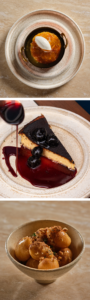
From Portokalopita to Loukoumades: The Five Greek Desserts You Need to Try
When we think of Greek cuisine, desserts don’t always steal the spotlight. With icons like Greek salad and lamb moussaka leading the way, the sweet ending is often overlooked. But in Greece, dessert tells its own quiet story – one of patience and craft.
From syrup-soaked cakes to honeyed bites shared over coffee, Greek desserts are designed to be lingered over. Whether you’re wandering the streets of Athens or settling in for a relaxed evening at our South Kensington restaurant , these five Greek desserts are worth making time for.
1. Portokalopita
Best enjoyed slowly with a coffee in hand, Portokalopita is a traditional Greek cake made with layers of filo pastry rather than flour. Oranges, a staple in Greek cuisine, lend their sweetness to this dish, which should always be served the day after making, to allow the cake to become an impossibly soft – and rich – treat. At Myrtos London, we serve our Portokalopita with Kaimaki Ice Cream, known for its herbal notes and gently elastic texture.
2. Loukoumades
Often described as Greek donuts, Loukoumades are small, deep-fried balls of dough – crisp on the outside, light on the inside. Originating from the Arabic word luqma, meaning morsel or bite-sized, Loukoumades can be found in a number of different countries, each with its own interpretation. At Myrtos London, they’re finished with thyme honey, crushed walnuts and Ceylon cinnamon for an added touch.
3. Feta Cheesecake
While most cheesecakes are prepared using cream cheese or mascarpone, a feta-based version is surprisingly light and fresh, reflecting the character of the much-loved cheese. Ours is served only on a Sunday with cherry spoon sweet, fruit preserved in a sugar syrup, traditionally offered as an accompaniment to coffee, ice cream or yoghurt. The sweetness works against the tang of the feta, making this cheesecake a balanced end to the meal.
4. Kataifi Chocolate Mousse
This dessert is defined by the contrast between crisp shredded kataifi pastry – made from fine strands of filo – and a light, creamy mousse, often enriched with nut-based flavours. Our take centres on pistachio, paired with ice cream infused with Metaxa, the Greek amber spirit, bringing smooth notes of brandy, Muscat wine and subtle Mediterranean botanicals.
5. Greek Cheese Trolley
While cheese might not technically be a dessert, we think it’s the perfect ending to any meal. Cheese has long held a revered place in Greek culture, so much so that in ancient times it was watched over by its own god, Aristaios, son of Apollo. But beyond feta, Greece’s cheesemaking heritage is vast. Our Greek cheese trolley showcases a rotating selection, from smoked gais to mizithra. Served with olive stick bread and our cherry spoon sweet, this is a Myrtos take on a classic.
RESERVE YOUR TABLE
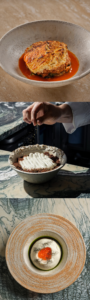
From Lamb Moussaka to Greek Salad: The 5 Dishes You Need to Try at Myrtos London
For many, Greek cuisine needs little introduction – its flavours already familiar, whether discovered through travel or first encountered at the table. Yet beyond the comforts of Greek salad and warm pita lies a far richer story; one shaped by the land, sea and memory.
At Myrtos London, these stories are retold with care. From our delicately layered Hortopita to the fragrant Dolmadakia with wild fennel, each dish honours Greece while gently reimagining it. With that in mind, here are five classic dishes to experience at our South Kensington restaurant. Slow down and savour a taste of Greece at your home away from home.
Lamb Moussaka
A comforting classic, moussaka is woven into the fabric of Greek home cooking. Layered with aubergine, potato, gently spiced minced meat and a silken béchamel, it is a dish shaped by time and memory. First created in the 1920s by Nikolaos Tselementes, it has since taken many forms. But at Myrtos London, we serve the dish as it was first made, with lamb at its heart and each layer assembled with a deep respect for the flavours of Greece.
Greek Salad
A Greek salad’s ingredients resemble those a countryman might have on hand when working in the field: feta, tomatoes, cucumber, onion and olives. At Myrtos London, our Greek Salad is built layer by layer and served with a twist. Think carob rusks, a silky feta mousse and a final whisper of wild oregano. Familiar flavours, reimagined with a lighter touch.
Taramosalata
A classic Greek meze made from a blend of tarama – the salted and cured roe of cod, carp or grey mullet – olive oil and fresh lemon juice. While Taramosalata is most often enjoyed on Clean Monday, marking the beginning of Great Lent, ours is prepared fresh each day and finished with fragrant dill oil, bringing a gentle lift to this time-honoured dish. Take note, this meze is best enjoyed with warm pita or our house sourdough.
Tirokafteri
Also known as ktipiti or kopanisti, tirokafteri is a spread consisting of feta cheese, hot peppers and olive oil, commonly served as part of a meze platter or by itself with warm pita. While the traditional recipe remains our foundation, our version is finished with Greek yoghurt, lending a smoother texture that invites you to savour every last bite.
Dolmadakia
A traditional Greek appetiser consisting of vine leaves stuffed with a mix of rice and aromatic herbs, Dolmades are commonly served as part of meze, accompanied by tzatziki, Greek yoghurt or olive oil and lemon. At Myrtos London, this beloved Greek classic is reimagined with elegance: served with silky avgolemono, a Greek sauce consisting of egg and lemon, and finished with wild fennel.